


On Friday, September 20, Ne Prosto Orchestra performed at the Bishkek’s Philharmonic. Ne Prosto Orchestra (The Not Just an Orchestra) is based out of Almaty, Kazakhstan. They are a group of young musicians that specialize in playing movie soundtrack scores. Originally put together by a few recent college graduates trying to figure out how to make a living with their music degrees, the group now hosts a few dozen performers who travel widely within Eurasia and perform successfully within the grey zone of high art and pop culture.
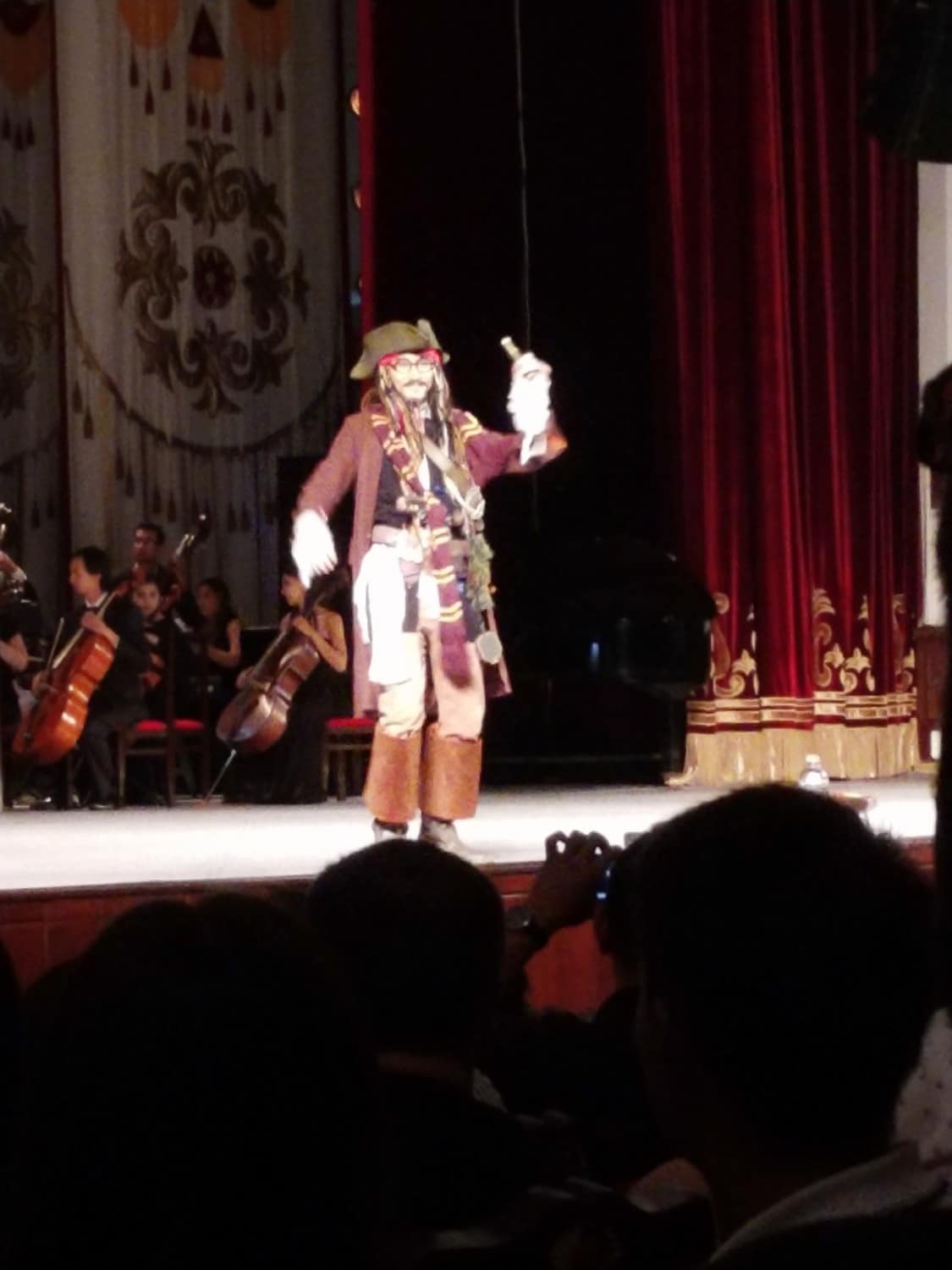
Their Bishkek performance was based on the Harry Potter and Pirates of the Caribbean series. The performance consisted of an orchestra and choir set to match selected clips from both movie series. To break up the two series, there was an intermission halfway through the show. Highlights from all films spanning both series were used. Just as you would have at any performance, there was an encore at the very end. Since the movie montages has already reached their conclusion, the encore was a short clip of the Matrix, specifically the part where the protagonist must pick the red or blue pill. With all of the clips that were played being famous American films, this served as a reminder to me as to how pervasive American pop culture is worldwide. The most interesting thing about seeing these movie clips in another country was that portions of the movies were dubbed in Russian, played over the sound of the orchestra.
I personally enjoyed the performance very much because it combined a few of my interests – live orchestras, a choir, and American movies. In all honesty, I have not seen all of the Harry Potter movies or Pirates of the Caribbean. The Matrix was the only movie included that I had seen. Despite this, I was surprised that I still recognized some of the scenes from Harry Potter. I enjoyed the way that the music was set to film and thought that it matched the scenes very well, particularly when there were moments of suspense. It was radically different than anything I had ever experienced before. It also piqued my interest in setting aside time to watch these American movie series.
In total, the performance ran about two hours. It did, however, start a half an hour late because some of the performers arrived late.
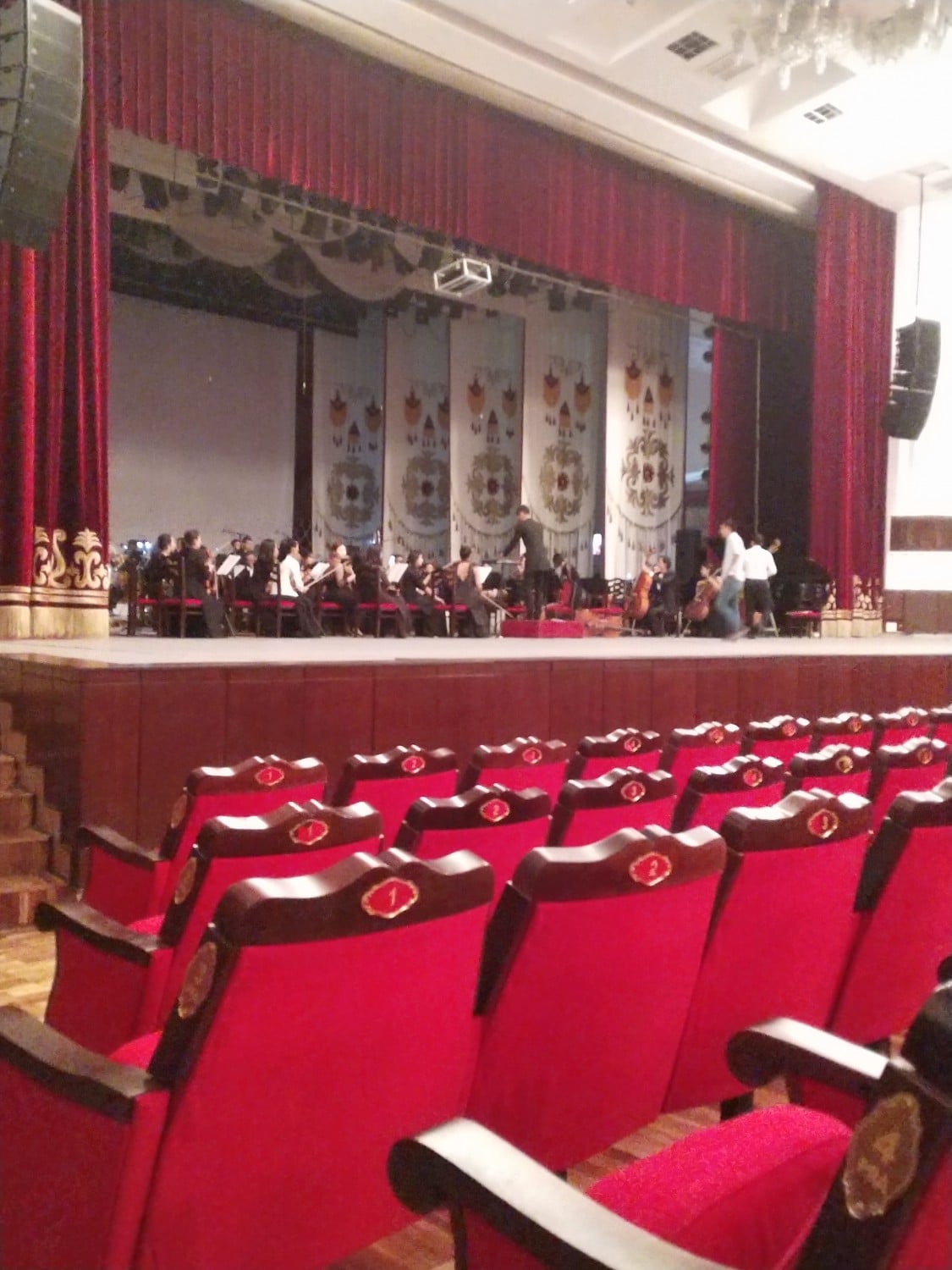
The general entrance fee for this performance ranged anywhere from 1200 soms to 1700 soms ($18-$25). Tickets can be bought both online at ticket.kg or in person at the venue. However, since one of the other SRAS students has a host mom that works at the Philharmonic, we were invited to attend for free and even had a backstage tour.
The Philharmonic building itself is in Bishkek’s city center and is one of its biggest architectural attractions. In front of the white-marbled building is a large statue of the Kyrgyz national hero, Manas, with smaller statues of Kanykei, Manas’s wife, and Bakai, his spiritual advisor, at its base. The institution was dedicated to composer Toktogul Satylganov, an improviser and poet who set his words to music. He remains one of the most influential figures in Kyrgyz arts, and is considered to be one of the founders of Kyrgyz literature.
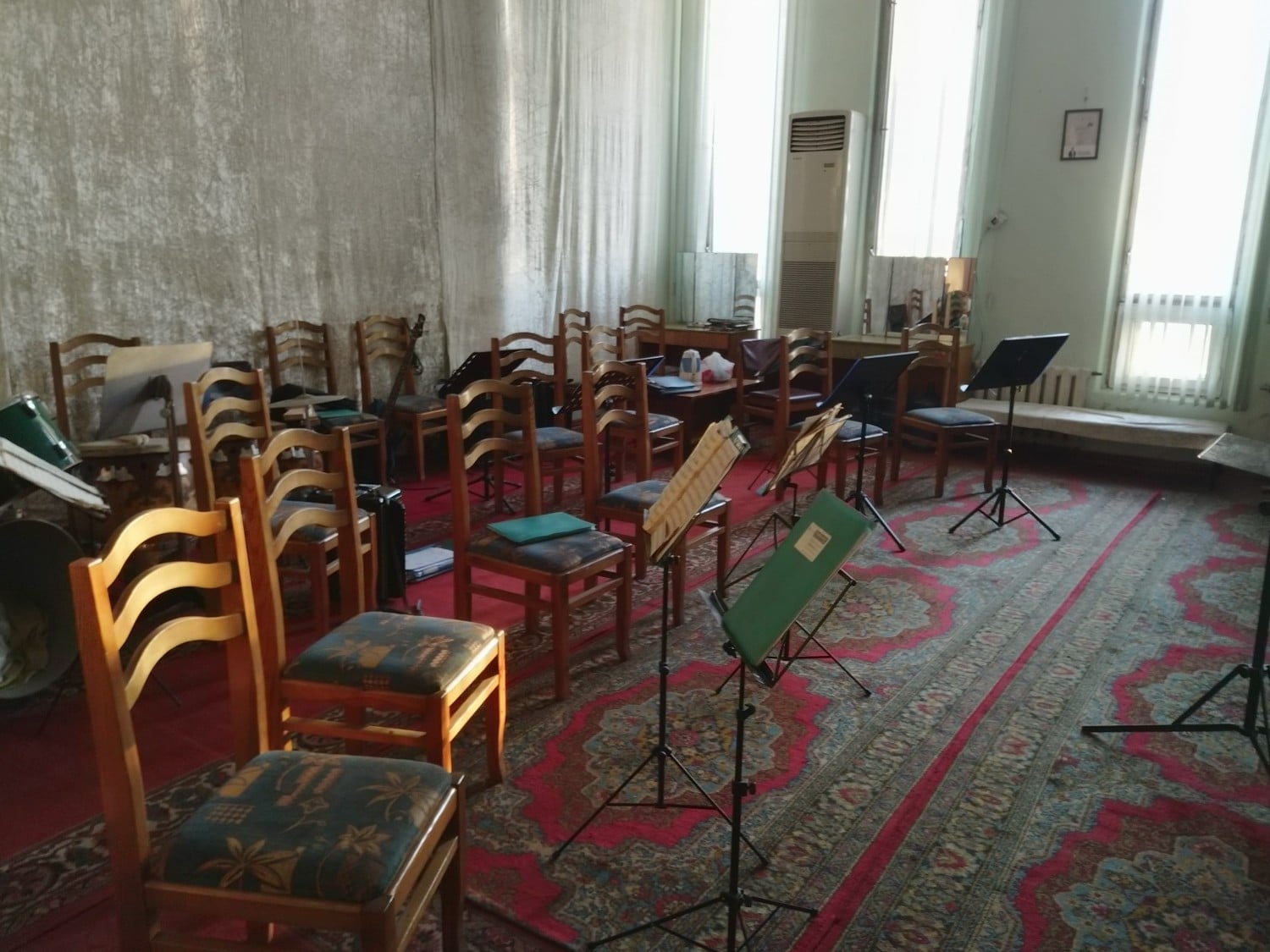
We entered through the back door with our private guide and walked past the stage and saw some of the dressing and green rooms. On one of the upper-level floors, my friend’s host mom showed us her classroom. Her specialty is the violin. She introduced us to what we would see that night by showing us videos online of a Ne Prosto Orchestra performance in Russia.
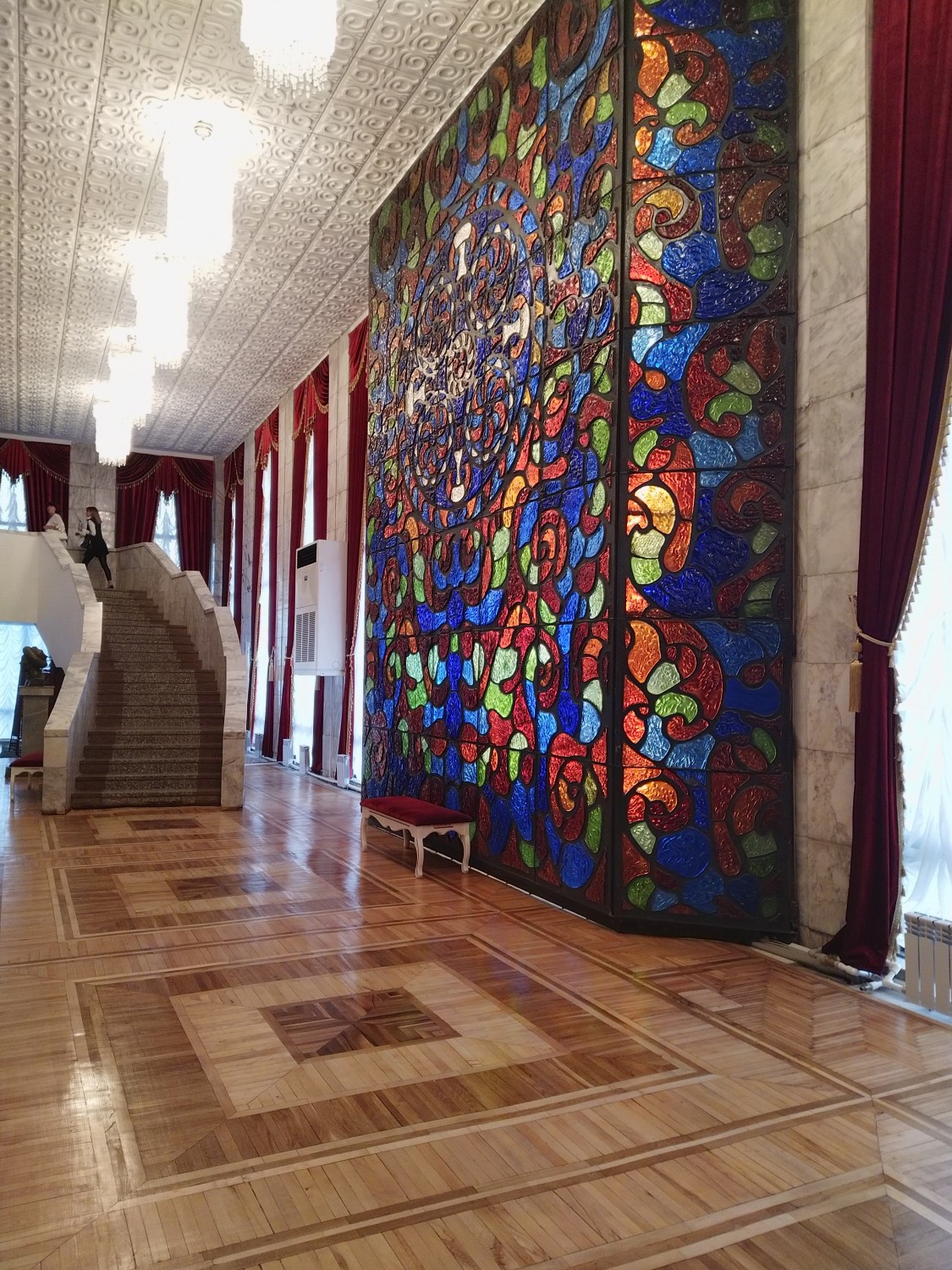
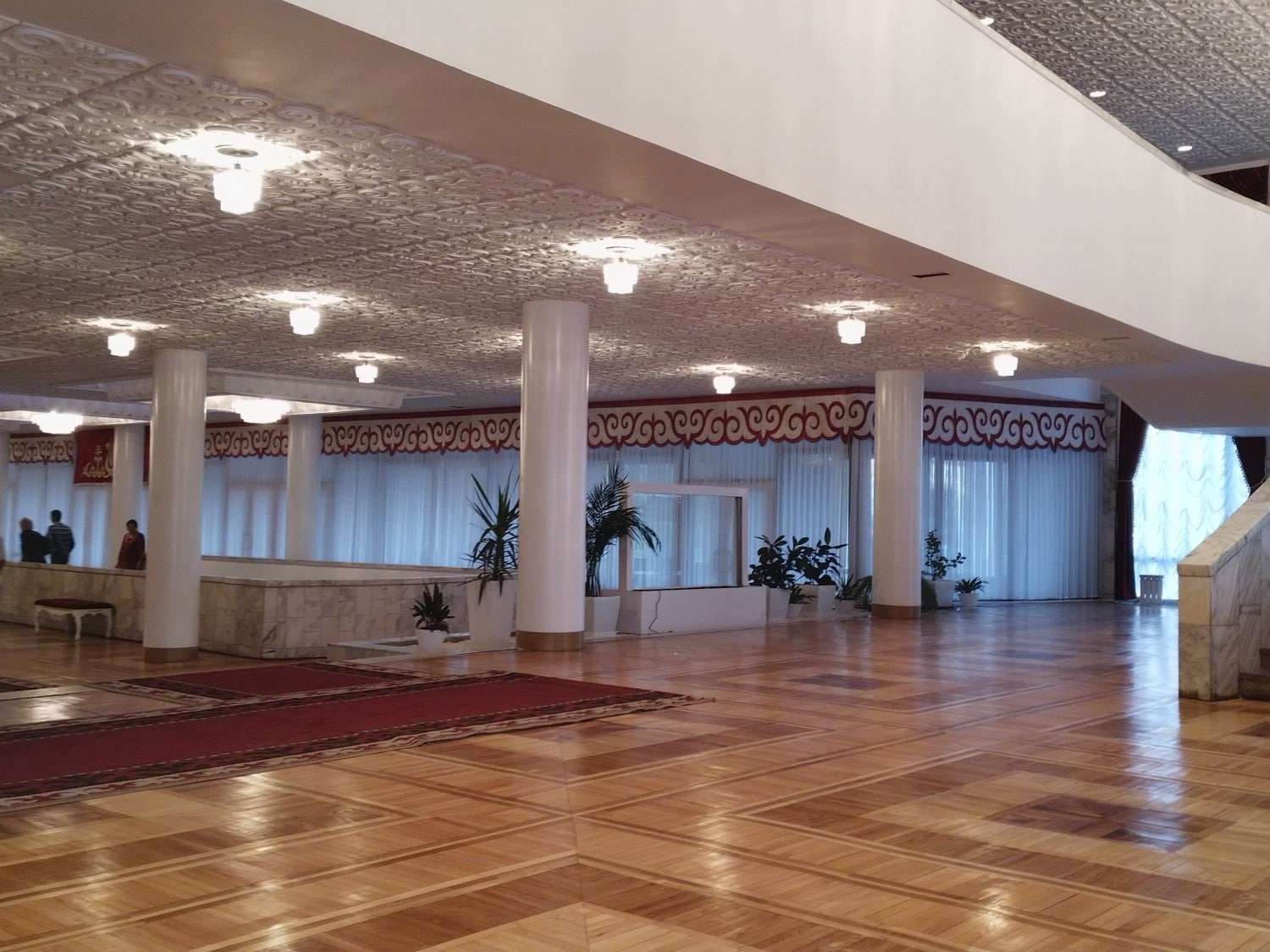
We then went to the seating area. The Philharmonic has a main level and an upper level. The performance was not sold out and we were easily able to find seats on the main level. The inside of the Philharmonic is equally as magnificent. The Philharmonic was recently renovated and now the white marbled walls on the outside match the inside and there is red carpet in the main hallway leading to the auditorium. Electric chandeliers, both big and small, light the venue. This may be one of the fanciest buildings in all of Kyrgyzstan, aside from those used by the president.
As it does not have its own performing group, performances are held sporadically at the Philharmonic. It does not operate its own website either. Thus, the easiest way to find a schedule is by looking at tickets.kg. Attending a performance at the Philharmonic is a great way to experience both local culture and art within Kyrgyzstan.
You Might Also Like

Northern Fleet / Северный Флот
Northern Fleet (Северный Флот) is a contemporary Russian rock band. Formed in 2013 by members of the seminal King and Jester (Король и Шут) after the death of frontman Mikhail Gorshenov (Михаил Гошенов), Nothern Fleet plays a distinctive brand of rock influenced by metal, industrial, and hardcore punk. Northern Fleet annouced their formation as a band […]

Troeraznykh / Троеразных
Troeraznykh (Троеразных; the name translates to “three different”) is a Kyrgyz rap collective most of whose songs are in Russian. They originally consisted of two beatmakers and one guitarist—or, as Boorsok, a Kyrgyz magazine, has put it, “three forms who don’t resemble one another even by a drop.” They aim to be a “human” group, […]

Uma2rmaH
This Russian pop-rock and soft rock duo, formed in 2003, is actually named after American actress Uma Thurman. They typically write their band name with the (mostly) Latin letters as above, but occasionally one sees their name Russified as “УмаТурман” in Russian. Brothers Sergei and Vladimir Kristovski, who comprise the band, site a long-held adoration […]

T-Killah
T-Killah is the stage name of Aleksandr Ivanovich Tarasov (Александр Иванович Тарасов), a Russian rapper who has gained a substantial following mostly through internet-only releases. The social networking site VKontakte is one of T-Killah’s main platforms, though he has also released two physical albums. Tarasov grew up in Moscow, studied economics, theater, and music, and […]

Korol i Shut / Король и Шут
Korol i Shut (Король и Шут; King and Jester) is an iconic Russian punk band that existed from 1987 until the death of the band’s leader in 2014. Their sound combined elements of horror-punk, hardcore, folk rock, and also showed a strong influence of rock n roll groups like The Beatles. In 1987, Leningrad classmates […]
