

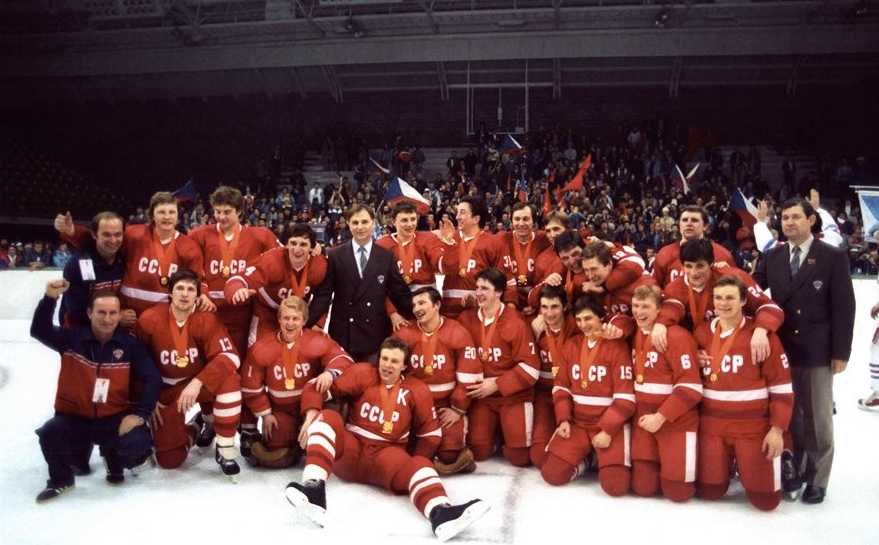
While Russia’s political history has been tumultuous and unpredictable, one thing has remained an unfaltering constant: Russians are good at hockey. While Brezhnev dealt with the fiasco that was the Afghan War, Viktor Tikhonov led the Soviet Union’s national ice hockey team (Сборная СССР по хоккею с шайбой) to victory, after victory, after victory. Winning almost every world championship and Olympic game from 1954 to 1991, the Soviets remain the most dominant team in the history of international play.
More recently, however, hockey has shown itself to not be completely above political events. The fall of the USSR and the collapse of the Russian economy lead to a financial crisis for Russian hockey teams and an exodus of top players. Just as the financial crisis seemed resolved and talent was flowing back to Russia, geopolitical events have lead to the Russians being expelled from international competitions. Russia’s strong hockey traditions, however, continue to produce some the world’s top talent world-wide, even though their teams are largely confined to the former USSR.
Soviet Principles of Hockey Coaching
According to the socialist principles espoused by the Soviet government, the success of the society was more important than the success of the individual. Soviet hockey thus worked not to have every player a star, but instead utilized the strengths of each player to create an almost indestructible machine – and an Olympic gold medal magnet. It’s no surprise that some members of the Soviet national team are still regarded as some of the best to ever play their position: right wing Sergei Makarov, goaltender Vladislav Tretiak, and defenseman Vyacheslav Fetisov.
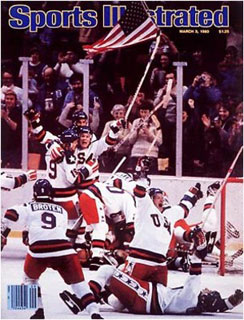
Perhaps nothing can illustrate how unstoppable the Soviets were than the famous “Miracle on Ice” game at during the 1980 Winter Olympics. One of the greatest upsets in sports history, the Americans came from behind in the final period to defeat the heavily favored Soviet team 4–3. Occurring at the height of the Cold War, the win was celebrated as a geopolitical victory as well.
Viktor Tikhonov was not only the coach of the national team until 1994, but also coached the Red Army’s team in the Soviet League, CSKA Moskva (ЦСКА Москва). Tikhonov held the rank of general in the Red Army and ran his team accordingly. They practiced ten to eleven months per year, living together in army barracks – even if they were married. With such “dedication,” CSKA Moskva dominated the Soviet League, winning the championship 32 times in the league’s 46 year existence.
The traditions started under the USSR – expectations of long, intense training sessions and absolute excellence from athletes – continue today.
The Kontinental Hockey League
Since the fall of the Soviet Union in 1991, the Soviet League has undergone several transformations. In 1992, it was replaced by the International Hockey League (Межнациональная хоккейная лига), which united clubs from Russia, Kazakhstan, Latvia, Ukraine, and Belarus. However, the unstable post-Soviet economy limited sponsorships and financial stability, and the league struggled to operate smoothly.
The MHL eventually folded and was succeeded by the Russian Superleague (Чемпионат России Суперлига). Initially featuring only Russian teams, it expanded in 2008 to again include Belarus, Kazakhstan, and Latvia, and was renamed the Kontinental Hockey League (KHL) (Континентальная Хоккейная Лига). Kunlun Red Star became the first Chinese team to join the KHL in 2016. They have since relocated to Shanghai and rebranded as the Shanghai Dragons.
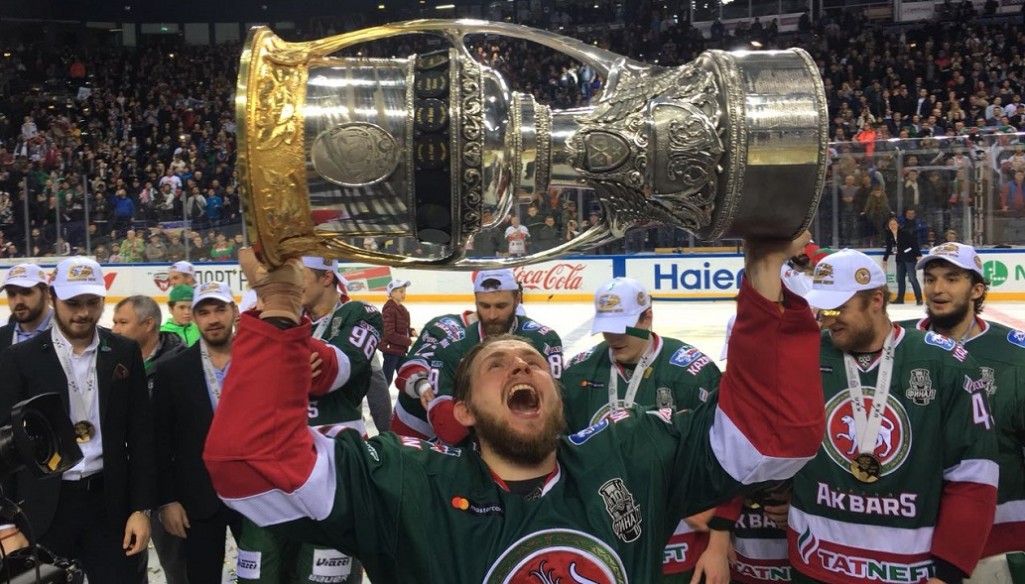
The “K” in the league’s English name may have been chosen to distinguish it from the Canadian Hockey League. After just one season, the IIHF recognized the KHL as the strongest league in Europe, and it is now widely considered the second-best league in the world behind the NHL.
Today, the KHL consists of 23 teams split into two conferences (East and West) and four divisions. The regular season runs from September to March, followed by the playoffs for the Gagarin Cup (Кубок Гагарина), named after cosmonaut Yuri Gagarin. The league attracts players from diverse backgrounds but is known for its disciplined style of play, helping it remain a well-rounded and competitive organization.
The KHL’s stated goal from its inception has been to compete with the NHL. Early on, that ambition seemed realistic, supported by the success of Russia’s national team—the direct successor to the Soviet team and still one of the world’s best. At the IIHF World Championships in 2008 and 2009, when Russia won back-to-back titles, 15 of the 26 players on its roster played for KHL clubs, with the rest in the NHL. Russia added two more championships in 2012 and 2014, bringing the combined Soviet and Russian total to 27 titles.
Despite these successes, the KHL has long faced financial challenges that limit its ability to attract and retain top talent. In its early years, reports circulated—though rarely confirmed—about clubs falling behind on salary payments. Khimik Voskresensk (Химик Воскресенск) declared bankruptcy and withdrew in 2010, Atlant Moscow Oblast (Атлант Москва) folded in 2015. These economic issues, inherited from the Russian Superleague era, remain a major obstacle if the KHL hopes to match the NHL’s competitiveness. Although the Russian economy has improved, there have not been enough fans and sponsorships for the glut of teams formed under the USSR’s command economy. Most recently, even Ak Bars Kazan, traditionally one of the league’s wealthier franchises, has reportedly had to make deep budget cuts, including shutting down its farm team in Russia’s secondary league to stay financially afloat.
While the KHL has established itself as Europe’s strongest hockey league and a proving ground for elite talent, its long-term success depends on solving persistent financial instability. Further, the KHL will have to compete with the NHL—not only in prestige and quality of play, but at least loosely on financial terms if it hopes to keep its top talent. Without stronger economic footing, the league will remain vulnerable to losing its best players to the lure of higher salaries and greater visibility in North America.
Poaching Players: The KHL-NHL Rivalry
The NHL and KHL have a long-standing rivalry, much of it centered on poaching. Even during Soviet times, there was constant fear that top players would defect to play in the US, even though the Soviet league was arguably the best in the world. During the last years of the Soviet Union’s reign, as economic and social hardship grew in the USSR, the risk and fear of players defecting increased to alarming levels. Coach Viktor Tikhonov often went so far as to bench his best players during international tournaments to prevent them from leaving. Despite the measures taken, players like Aleksandr Moginly, Igor Larianov, and Vyacheslav Fetisov all defected and eventually joined the NHL where they went on to have legendary careers.
The rivalry continued into the 1990s, after the fall of the USSR meant that it was much easier for Russians to emigrate and economic opportunity was far greater outside of the newly independent Russia. Several players left for American teams including Pavel Bure going to the Vancouver Canucks and Alexei Kovalev joining the New York Rangers.
Tensions between Russian and North American hockey only grew when the KHL was formed. Intent on demonstrating the strength of Russian hockey, three exhibition games were held between KHL teams and NHL teams. The first, in 2008, was held in Switzerland and featured Metallurg Magnitogorsk—the European Champions cup winners—and the New York Rangers in an event called the Victoria Cup Challenge. Despite Metallurg starting out strong, going up 3-0 by the second period, New York ultimately won the game 4-3. The other two games took place in 2010, with SKA Saint Petersburg facing off against the Carolina Hurricanes in a 5-3 win, and Dinamo Riga playing against the Phoenix Coyotes in a 3-1 loss.
These exhibition games showed the two leagues to be competitive, but did show the NHL still led the advantage. However, it is also true that some of this is due to the Russian players attracted to the NHL; Stars like Aleksandr Ovechkin, Nikita Kucherov, Artemi Panarin, and Kirill Kaprizov have consistently ranked among the league’s top scorers in recent years. On defence, goaltenders like Sergei Bobrovsky, Andrei Vasilevskiy, Igor Shesterkin, and Ilya Sorokin have proven indispensable. Bobrovsky’s Florida Panthers achieved back-to-back Stanley Cup wins in 2024-2025, while Vasilevskiy’s Tampa Bay Lightning did the same in 2020-2021.
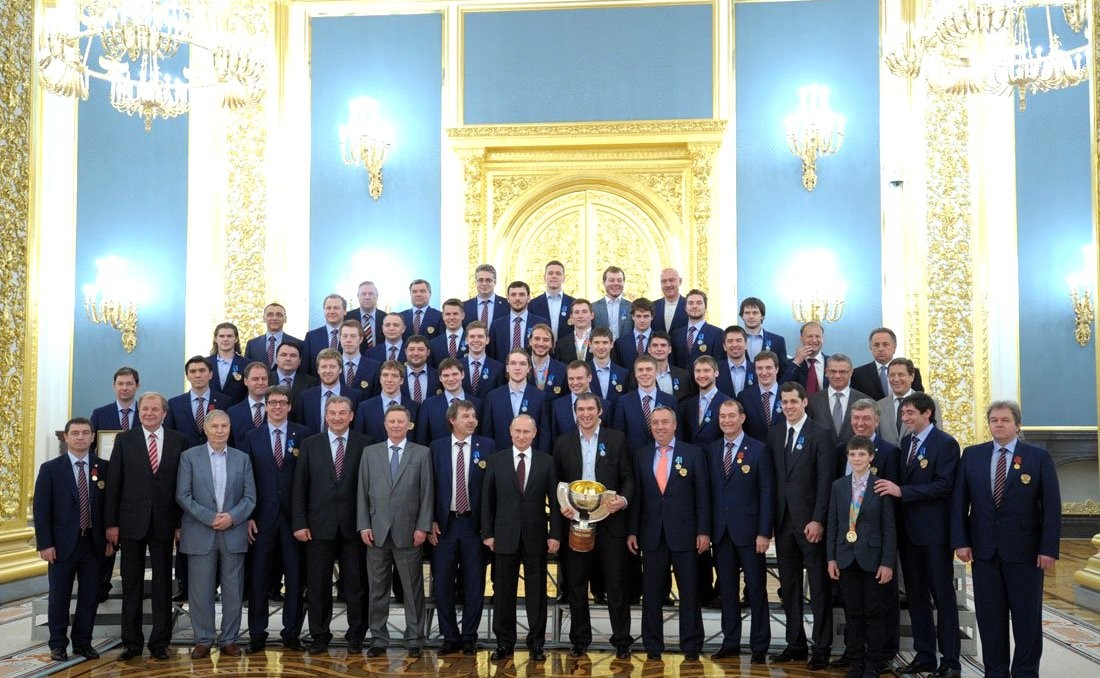
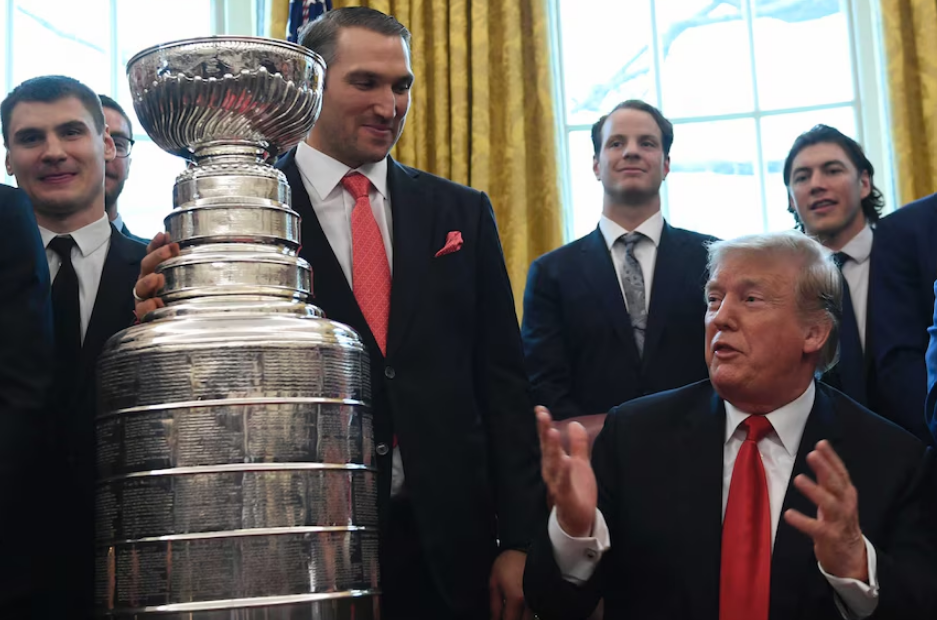
Ovechkin, in particular, is a symbol of Russia’s impact on global hockey. Known for his fiery passion that compels him to, for example, slam himself into the boards after scoring, he stands in stark contrast to the stoic image of old Soviet hockey. The passion Ovechkin exudes on the ice is almost tangible. Since debuting in 2005 with the Washington Capitals, the same year he joined the Russian national team, Ovechkin has racked up accolades. He won the Calder Trophy as Rookie of the Year, eight Maurice “Rocket” Richard Trophies as the NHL’s top goal scorer, three Hart Trophies as MVP, and the Conn Smythe Trophy when he led the Capitals to the Stanley Cup in 2018. In 2025, he made history by surpassing Wayne Gretzky’s career goal record, finishing the season with 897 goals.
Ovechkin is also a good example that, although many Russians come to compete in North America, their loyalty to their homeland and personal politics may not necessarily change. In November 2017, Ovechkin launched and promoted a social movement called Putin Team, asking fans to unite behind President Putin under the banner of Russian patriotism. He has repeatedly maintained a visible connection with Putin, posting photos of the two together on his social profiles even amid mounting geopolitical tensions. In early 2022, following Russia’s invasion of Ukraine, Ovechkin refrained from political condemnation, instead emphasizing that “he is my president” and asserting that he is “not in politics,” despite heading an organization whose sole purpose is to support Putin.
Given continued connections to their homeland, it is not entirely surprising that, even despite their success abroad, many Russian players have eventually returned to play in the KHL. They are often driven by better contract offers, family concerns, or patriotism. Aleksandr Radulov made headlines in 2008 when he broke his NHL contract with the Nashville Predators to join Salavat Yulaev Ufa during the KHL’s inaugural season. The timing sparked controversy, as it came just days after the NHL and KHL had signed an agreement to respect existing contracts. The KHL pointed out that Radulov’s deal had been signed three days before the agreement, and it has been upheld. After eight years in the KHL, he returned to the NHL playing for the Montreal Canadiens and then Dallas Stars, only to head back to Russia in 2022. He now plays for Lokomotiv Yaroslavl.
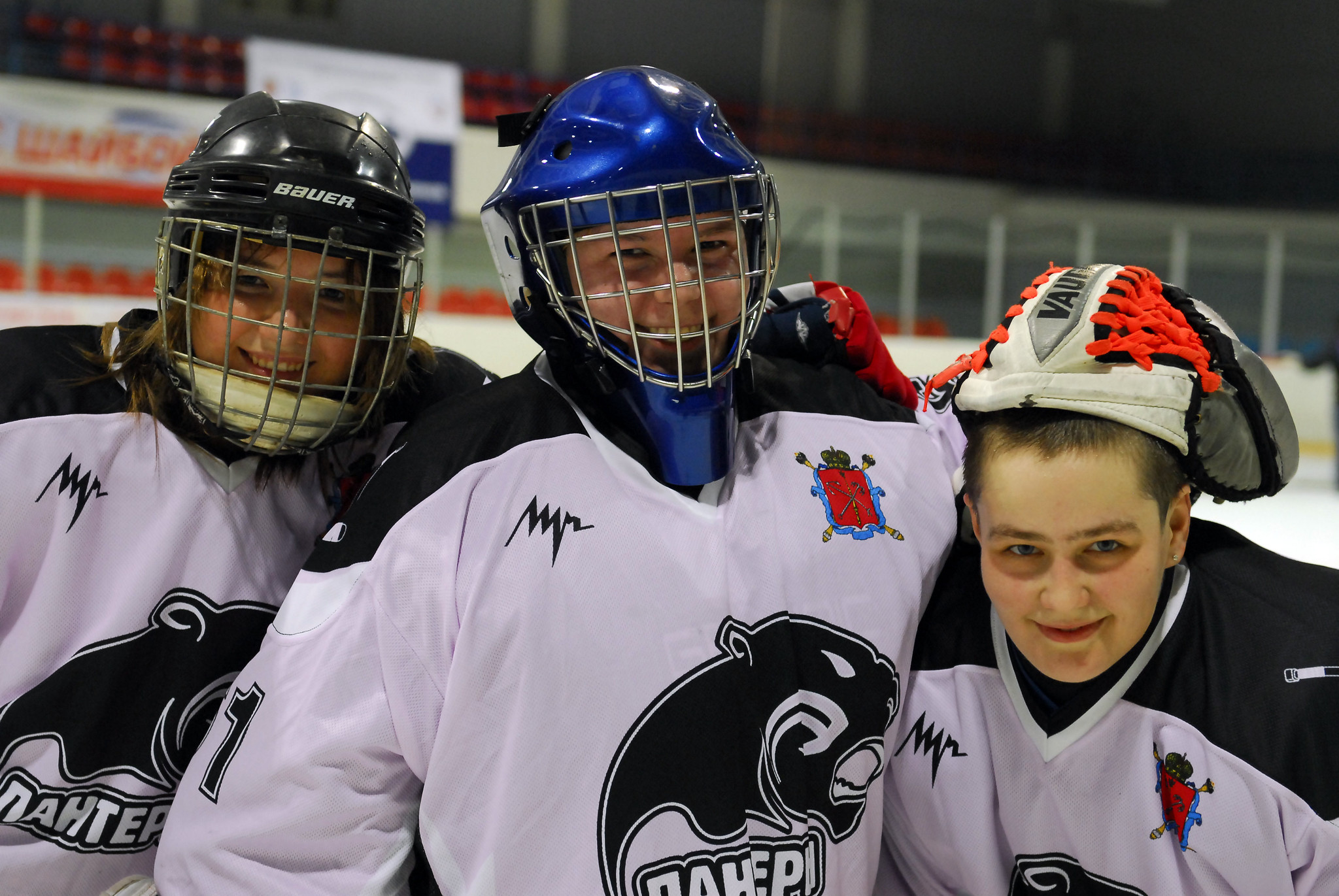
Sergei Fedorov, the most successful Russian scorer in NHL history until Ovechkin surpassed him in 2019, had been among the first to defect from the Soviet Union. After a storied career, he returned to Russia in 2009, turning down NHL offers and saying that he would fulfill his father’s dream of seeing his sons play together on the same team. Others like Vyacheslav Kozlov, Pavel Datsyuk, and Ilya Kovalchuk also made late-career returns to Russia.
The KHL has actively worked to reverse the talent drain, recruiting aging or struggling NHL players with promises of higher salaries than if they had stayed with the NHL. This was made possible by Russia’s improving economic situation through the 2000s and was extended even to non-Russians. After a few stints in Chicago, Canadian Matt Ellison found success in the KHL as a prominent scorer, for instance.
As recently as the 2024-2025 season, NHL teams acquired Ivan Demidov and Aleksandr Nikishin – both from SKA Saint Petersburg. Demidov terminated his SKA contract early to join the Montreal Canadiens, who drafted him fifth overall. A KHL Rookie of the Year, he scored a goal and an assist in his first period on the ice for the NHL. Similarly, Nikishin, formerly SKA’s captain and all-time leading scorer among defensemen, joined the Carolina Hurricanes late in the season and is expected to be a force for the team in 2025-2026 play.
Today, there are 51 Russian nationals in the NHL, accounting for about 7% of all players. There are also several coaches and agents as well as Russians recruited even for administrative and promotional work.
While “poaching” is, at its base, simply teams seeking the best talent and players seeking the best contracts, it is frustrating to many Russian fans that the NHL’s resources have lured exceptional players away from their home country. In fact, as recently as October, 2023, Russian President Vladimir Putin gave specific instructions to the Russian Ministry of Sports to find ways of discouraging “hockey dealers” from luring Russian athletes abroad.
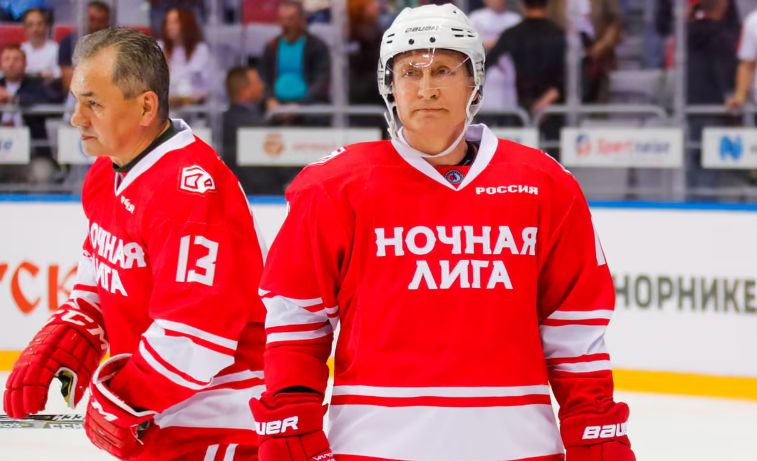
Putin has taken a particular interest in hockey since coming to power. An amateur player himself, he started the Night League to promote hockey as a sport. The league has also served to promote Putin’s own image as a physically strong, active leader and to act as a platform to promote his wider government’s image and as a platform for soft power diplomacy. Although not fully televised, the Night League often makes Russia’s nightly news showing friendly matches between players that often include retired or active KHL stars, government officials, and foreign dignitaries. Perhaps most famously, he took to the ice against Belarusian leader Aleksandr Lukashenko in 2021 in a match that saw the Russian leader score (a somewhat questionable) eight goals.
Geopolitics and Scandals Split the Sport
The KHL’s ambitions have been tested in recent years by political crises and global sanctions. Doping has been a major issue across sports for Russia, including hockey.
In a particularly tragic case, Alexei Cherepanov, who was selected for the 2007 NHL Draft to play for the New York Rangers, died at age 19 while he continued to play in Russia’s Kontinental Hockey League (KHL). It was later found that he had a genetic heart condition but had taken performance enhancing drugs for months, meaning that his team doctors should have known about the situation from their required, regular medical testing.
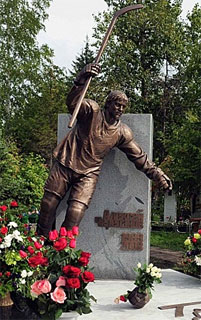
In the 2014 Sochi Winter Olympics, 14 Russian hockey players (both male and female) tested positive for performance-enhancing drugs. Their samples, according to an investigation, were illicitly swapped or made to “disappear” by Russian laboratory officials. As a result, the International Olympic Committee (IOC) stripped the Russian women’s hockey team of their results, and six players—including captain Yekaterina Smolentseva—were handed lifetime Olympic bans.
In 2019, the International Olympic Committee banned Russia from the 2020 Summer and 2022 Winter Olympics over state-sponsored doping violations. Before the ban expired, Russia’s 2022 invasion of Ukraine triggered a fresh ban covering the 2024 and 2026 Games. Russian athletes may still compete, but only as “Individual Neutral Athletes” under strict rules barring national symbols. That same year, the International Ice Hockey Federation (IIHF) suspended Russia from international competition—a ban now extended through the 2026–27 season.
The war in Ukraine has had further consequences for the KHL. Dinamo Riga and Jokerit of Finland withdrew from the KHL in protest. The NHL also suspended communications with KHL teams. Many foreign players also left the KHL, terminating their contracts to join other leagues outside Russia. For example, Markus Granlund, originally from Finland, terminated his contract with Salavat Yulaev Ufa and moved to the Swiss League. Americans Nick Shore and Kenny Agostino, both former Olympians, also cancelled their contracts and left Russia and the KHL. The exodus has not been complete, however. American Shane Price continues to play in the KHL. He had long played for the Belarusian National Team as well, for which Belarus granted him citizenship, until changes to international hockey rules prevented him from doing so.
While the Night League started by Vladimir Putin has continued to be active, it has not appeared on televised news as much and has not featured Putin himself since the start of the war.
Despite these challenges, Russian hockey continues to produce elite talent—from legends like Makarov, Tretiak, and Fetisov, to stars like Ovechkin, Malkin, and Kucherov, and rising prospects such as Demidov and Nikishin. Wherever they play, Russian players remain among the sport’s most formidable forces, ensuring the nation’s enduring influence on the game.
The article above was originally written by Lisa Crandall in 2009. It was updated by Ana de la Llave in 2025 and Josh Wilson in 2026.
You’ll Also Love

Russian Hockey from Soviet Glory to Geopolitical Struggle
While Russia’s political history has been tumultuous and unpredictable, one thing has remained an unfaltering constant: Russians are good at hockey. While Brezhnev dealt with the fiasco that was the Afghan War, Viktor Tikhonov led the Soviet Union’s national ice hockey team (Сборная СССР по хоккею с шайбой) to victory, after victory, after victory. Winning […]

Russian Soccer: An Introductory Guide
Russian soccer caught the world’s attention in 2018, when Russia hosted a very successful FIFA World Cup. The game is Russia’s most popular national sport, ranking just above hockey, and Russia poured millions into new stadiums and renovations on older, Soviet-built stadiums. This construction was made as a point of pride for the Russian government, […]

Kyrgyz Soccer: An Introductory Guide
The history of soccer in Kyrgyzstan goes back to 1921, with an oft-cited first match taking place in Bishek, Kyrgyzstan’s capital city, against a team from Kazakhstan. The Kazakh team won, but not before the sport of soccer staked a permanent claim on the Kyrgyz national consciousness— the game’s been culturally significant ever since. However, […]

Behind the Mask: Safety, Stigma, and Self-Expression in Ice Hockey’s Goalie Mask
Ice hockey is a sport defined by speed, impact, and precision. Players must aggressively fight for position at breakneck pace in a game as physically punishing as it is technically demanding. Injuries are an unfortunate but expected part of the sport, and no position is more vulnerable than that of the goaltender. Tasked with stopping […]

Baseball: The St. Petersburg Dockers
Think there’s no baseball in Russia? Think again. America’s favorite pastime is gaining popularity across Russia, although it remains a niche sport. Real baseball stadiums can be found in Moscow and its suburbs and Vladivostok, with notable participation in local leagues in St. Petersburg, Nizhny Novgorod, Samara, Kazan, Astrakhan, and more! In St. Petersburg there […]

