


By the late 1960s, rock music had fully infiltrated the USSR. Realizing that they could not censor the music and increasingly feeling that they were competing with the West on every level from military to scientific to cultural, the Soviets instead tried to co-opt the popular music.
An early attempt at this was the creation of VIAs and VIOs, which stood for Vocal-Instrumental Ensemble (вокально-инструментальный ансамбль) and Vocal-Instrumental Orchestra (вокально-инструментальный оркестр), respectively. These official groups were meant to repeat the success of the widely popular estrada genre, whereby pop culture singers had been cultivated within professional conservatories and supported by operating directly under theaters, philharmonics, or other cultural institutions.
VIAs and VIOs had considerable success, particularly in Georgia. However, Georgia was also an early cradle of independent and uncensored rock in the USSR.
The resource below presents a short history of the VIA and VIO movements, briefly describes what made the development of modern music in Georgia unique, and then profiles several of the bands from the era whose influence and memory have been longest-lasting in Georgia and beyond.`
The Soviet History of Modern Music in Georgia
Georgia’s long history of being occupied by foreign powers had built a pillars of resistance and independence into Georgian culture. This would play a major role in the development of modern musical forms in the Georgian SSR.
Styles and Controversies of VIAs and VIOs
VIAs and VIOs were flexible in structure, although all had both instrumentalists and singers. A VIA had from three to about a dozen members while a VIO, as the name implied, had an entire orchestra and often multiple singers. Most relied heavily on sting, percussion, and keyboards to create the rock sounds that were being popularized internationally. Like estrada, they typically performed songs composed and/or arranged by other professionals and their style was driven by an appointed artistic director.
Inspiration was taken from western music including rock, funk, disco, blues, and jazz, although classical forms and local folk traditions were also mixed in. The Soviet groups emphasized polished vocals, accessible melodies, and lyrics that most often celebrated love, nature, work, patriotism, or traditional culture.
Some were formed as stand-alone bands while others were intended as specifically backup bands to support visiting stars. Those founded as stand-alone bands were developed much like estrada artists, with the groups absorbed into the growing Soviet entertainment ecosystem, presenting concerts, making records, participating in filmmaking, and supported by televised specials and program appearances.
The Soviet authorities felt that they might even be able to create something better than the West’s rock music, because Soviet groups would use professional, classically trained musicians rather than amateurs as often prevailed in western groups.
However, there were important differences between the estrada success and the more modern experiment. In the 1960s, the world was becoming flooded with media and ways to consume it. Many Soviets were connoisseurs of Western culture, had heard many of the bands on smuggled or illicitly duplicated copies, and would judge the Soviet bands in comparison to the western “originals.” Another important distinction is that rock music often relies on an innovative or rougher edge than forms like estrada. This can be harder to reproduce in institutional settings. A further challenge was changes in appointed artistic managers could significantly change the direction of the band and its music, which could make it difficult to develop and maintain a fan base.
Today, there is some controversy over these groups. A widely-held view holds that they were sterile, state-controlled pop groups that produced nothing of value. However, it is also true that these groups cultivated genuine followings and their fans would argue that they did produce genuine art by drawing heavily on local and Western musical traditions.
This would be particularly true for bands formed in the Republic of Georgia.
Georgia as an Incubator for Soviet Rock
Georgia produced an unusually large number of successful VIAs, many of which became popular throughout the USSR while maintaining a distinct Georgian cultural identity.
Of particular importance to this was the Georgian tradition, established under centuries of foreign domination, of paying respects to colonial demands while at the same time jealously guarding the independence of Georgian language, culture, and religion behind the scenes. Historically, Georgia’s language, unrelated to any other language in the world and with its own unique alphabet, had assisted Georgia in maintaining this discrete independence. Georgia also had long, proud, and unique musical traditions that also proved to mix well with modern musical forms.
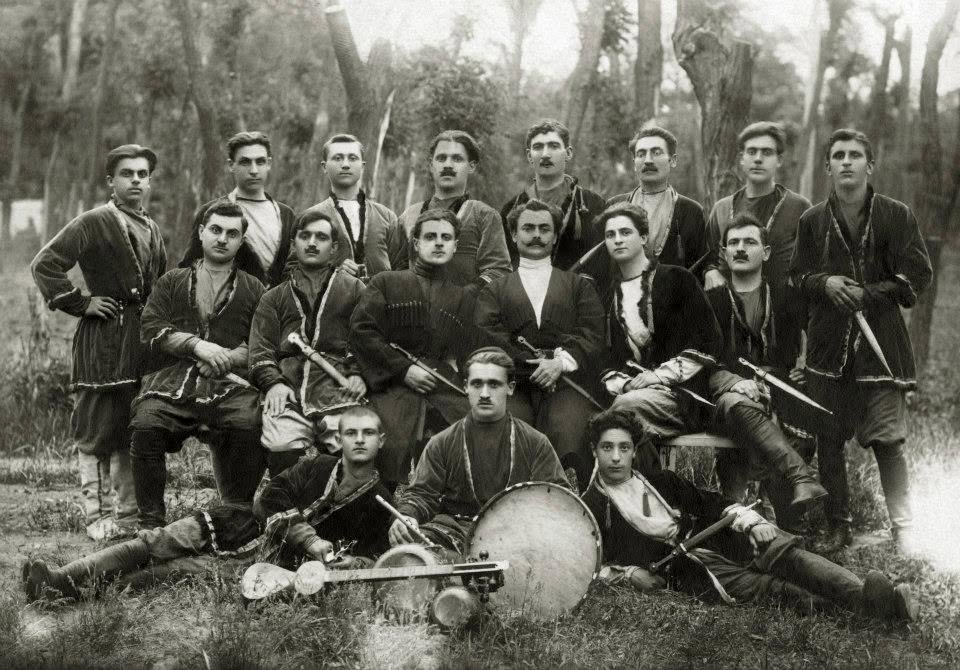
These traditions attracted the attention of early Tsarist ethnographers who made very early phonograph recordings in Georgia. They lived on through the Soviet era with the work of VIAs and VIOs as well as officially registered and supported amateur groups, like one composed of the employees of Tbilisi’s urban transit system. Modern groups performing mixed or pure Georgian song also remain active today.
Georgian bands also initially produced albums with at least some Russian-language songs. They would eventually, however, nearly all shift to all-Georgian albums as leniency grew over time.
Very few Russians learned Georgian and central censors in Moscow were highly unlikely to understand material produced in Georgian. They would be dependent on the analysis provided by their local counterparts in Georgia who were likely to be Georgian and thus far more likely to support greater cultural autonomy. In addition, the people of the Caucasus were expected to be exotic within Soviet culture and, as a people of a titular republic, were entitled to the right to uphold and promote their language and culture within the Russian-dominated bounds of Soviet unity. All of this granted the people and authorities of Georgia more leeway in approving artistic creation.
In addition to using local musical styles, Georgian bands even managed to produce local folksongs that sang of the proud independence of Georgia, sang of its distinct regional cultures, and even sang on religious themes thanks to language barriers and lenient local authorities.
This led to Georgian art being well localized to local tastes and often provided the music with a unique sound of its own. It allowed the music to be genuinely popular and to form its own following. Some records were even produced specifically for export, to show ethnic diversity and “cool” trends within the USSR.
All of these conditions, including a relative distance from Moscow censors and a proud tradition of independence couched, in part, in language and music, would also help form some of the USSR’s early uncontrolled rock influence.
Georgian Music Festivals
Georgia’s reputation as a place of creativity would grow as it hosted the 1978 All-Soviet Jazz Festival, with 26 of the best big band jazz, swing, bebop, and Soviet jazz-rock/fusion. This was followed in 1979 by a groundbreaking performance by B.B. King sponsored by the US Embassy.
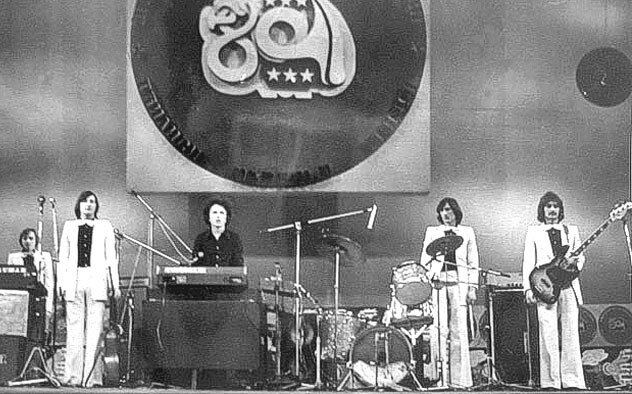
A crowning jewel in Georgia’s creative reputation, however, would come with The Spring Rhythms: Tbilisi-80 Rock Festival. Organized by the Georgian National Philharmonic Hall, the Union of Composers of the Georgian SSR, and the Republican Center for Youth Culture, it had the personal support of then-Georgian General Secretary Eduard Shevardnadze (First Secretary of the Georgian Communist Party), who wanted to use it to appease politically restless Georgian youth. Key architects included organizer Gaioz Kandelaki and the pioneering Soviet rock critic Artemy Troitsky. Advertised as an all-Union search for new talent, some of the most cutting-edge and avant-garde underground groups from across the USSR were invited.
A major dissonance arose, however, in genuine freedom exuded by the bands and fans and the invited Soviet judges from Moscow. Expecting disciplined and professional musicians, they took scathing offense at, for instance, a performance by the rock band Machina Vermeni in which the artists played their instruments lying down. The judges would later lobby for a crackdown on modern music, but this would bring few consequences.
A compilation album featuring the event’s laureates, Spring Rhythms: Tbilisi 80 (Вессение Ритмы: Tбилиси 80), was still released by Melody, the state record company and Tbilisi would still welcome the State Jazz Festival back in 1986 and 1989.
The Spring Rhythms festival, while not repeated, gained wide fame as a genuine “Woodstock” where both fans and bands took far-reaching liberties.
Creating Popular Art Under Censorship
While censorship may have limited an artist’s palette, it does not necessarily mean that popular art cannot be created under its conditions. The fact that many of the bands below continue to perform reunion shows to large audiences is an excellent indicator for how popular the groups truly were.
For a longer discussion of the work of Georgia’s VIA and VIOs, see Georgian VIAs: Between Submission and Subversion, a 2021 thesis by Irine Beridze.
Rero
Biography by Josh Wilson
Founded by trumpeter Giorgi Gabiskiria in 1957, Rero (რერო) was Georgia’s first officially registered VIO (Vocal-Instrumental Orchestra). Typically numbering around thirty musicians, the ensemble was sponsored by the Georgian State Estrada Orchestra and spent its formative years under the artistic direction of composer and conductor Konstantin Pevzner. They were known for Georgian folk-inspired music that arranged Georgian, Russian, and Western songs into jazz, funk, and variety-orchestra formats.
A 1962 Soviet newsreel shows Rero performing in Moscow as ambassadors of Georgian culture. Their featured song, “Bless Georgia,” is sung in Georgian and incorporates traditional polyphony. Written by a Jewish composer born in Baku, Azerbaijan, the song is remarkable for not only its origins, but also for the fact that it evaded the censorship that often quashed both works of Jewish artists and those with quasi-religious texts. However, this song remained Rero’s signature piece for all of Pevzner’s long leadership.
Rero’s 1966 EP opens with this song, with its title changed to “Oh, Rero, Rero,” probably to de-emphasize its possible spirituality for the censors. However, it then shifts to the English-language spiritual “When the Saints Go Marching In,” a song expressing Christian longing for eternal salvation. The album label documents it as a “Negro song,” as such spirituals could often be sold to censors as anti-oppression anthems that criticize Western societies rather than as expressions of religiosity. The other tracks include a modern Georgian love song and a joyful, energetic instrumental dedicated to Rustaveli Avenue, the main street in Georgia’s capital. The music is performed entirely in Georgian and English and only the liner notes appear in Russian.
Their 1972 EP also opens with an extend version of their “blessing” of Georgia, and then moves into another Georgian-language song celebrating Georgian feasting traditions. The last track is actually a Russian-language parody of Estrada songs, arranged as if they were samples from an international festival.
Leadership changed before the band’s 1976 LP, when jazz pianist and composer Givi Gachechiladze took over. Favoring big-band vocal harmonies and estrada formats inline with mainstream Soviet tastes, their first full album leaves out the signature opening song. Its eclectic twelve-track program includes songs by popular Soviet composers Yuri Antonov and Vyacheslav Dobrynin alongside popular but politically innocuous English-language covers of songs by The Beatles and Looking Glass. Although stylistically cautious, the album remains rooted in Georgian traditional culture through polyphonic modern jazz arrangements of traditional pieces such as “Chaguna” (“ჩაგუნა”) and “Khorumi” (“ხორუმი”), demonstrating how Georgian musical identity could coexist with Soviet expectations.
The band’s 1980 LP was released under the direction of Amiran Ebralidze. Formerly the artistic director of Dielo, Ebralidze embraced psychedelic jazz-funk and ambitious big-band fusion. Marking a distinct stylistic shift, the album opens with three Georgian-language songs, including “What is the Story of Guria?” (“რა ყოფილა გურია”), celebrating the western Georgian region and drawing on its distinctive “yodel-like” singing traditions. It then concludes the first side with an instrumental adaptation of B.B. King’s “Let the Good Times Roll,” retitled “Нам весело” and entirely instrumental, likely as the fairly hedonistic lyrics would have never cleared censorship. Side two is unabashed jazz art, starting with a rolling nearly 10-minute version of Keith Mansfield’s “El Dopa” (“Эль Допа”), considered one of the masterpieces of jazz-funk in the 1970s. It was slightly shortened from the original, likely to make room for the six-minute version of “Ave Maria“. Sold to the censors as an “appreciation of classical form” (the same excuse given by the Soviets for preserving church architecture), the song brings in soft electric guitars, but largely maintains the lyrics and even adds organs to heighten its sense of religiosity.
1980 was a high tide for musical freedom in Georgia. After the 1980 Tbilisi Rock Festival, soviet censors pressed for a crackdown. Ebralidze departed in 1982, and Rero gradually transitioned into a backing orchestra for leading estrada singers rather than an independent recording ensemble. Although the orchestra produced no further albums, alumni vocalists such as Vakhtang Kikabidze and Nani Bregvadze went on to become some of Georgia’s most celebrated performers.
Rero’s lasting cultural relevance has been recently reconfirmed with a revival group formed in 2020 by David Mazanashvili, a Georgian jazz musician, arranger, and composer. The new group carries on the tradition of presenting Georgian song through the language of modern jazz. They have given concerts and, in 2024, released a new album.
Orera
Biography by Philip Purifoy
Orera (ორერა) was the USSR’s first officially registered vocal-instrumental ensemble (VIA). They were known for singing in multiple languages while mixing local, regional, and western genres. Drawing in some of the USSR’s best musicians from across musical styles, they have gone on to perform continuously for nearly 70 years, making them one of the world’s longest continually-performing bands.
Robert Bardzimashvili was still a student at the Institute of Foreign Languages (now part of Ilia State University) in Tbilisi when he first formed Orera as a vocal quartet with three classmates in 1958. The link to the institute allowed them to perform in foreign languages and eventually they were sent on goodwill tours that covered every continent and dozens of countries – including the United States. In every country, they would learn some songs in the local language, whether in English, Afghan, or Swahili. Orera was presented as a cultural ambassador showcasing the USSR’s celebration of diversity.
Western vocal pop/jazz quartets such as The Hi-Lo’s and the Four Freshman influenced Orera’s initial sound. However, Georgian folk is the defining influence, with even the band’s name coming from a common interjection found in Georgian folk songs. “Orera” is often used to express various feelings of joy or intense emotion.
After they registered as a VIA in 1961 with the state, they were brought on as regular performers at the Tbilisi Philharmonic and to create much of the soundtrack for the 1962 Georgian feature film Laughing Dolls (თოჯინები იცინიან). Released to the wider USSR in 1964, this first appearance introduced the ensemble to a broader domestic audience.
The band’s debut album Rasha Orera (რაშა ორერა), was released by the state record label Melodiia in 1964. In the album’s first and titular track, one can hear the influence of vocal quartets as well as traditional Georgian polyphonic song. The rest of the album brings in languages and influences from Spain, Italy, Russia, and even Africa. In the album title, “Rasha” is another common refrain, used similarly to la-la-la in English folk songs.
By 1967, they were well-known on Soviet national television with performances such as “Pictures of Old Tbilisi” (“Картинки старого Тбилиси“) performed on the famed New Year’s Show, The Little Blue Light (Голубой огонек). The same year, their second album, To Our Girls (ჩვენს გოგონებს), featured a cover of the Four Freshmen’s “Day By Day,” sung in English. The following year they appeared on Georgian television with the song, featuring a minimalistic arrangement, with the singers donning white clothing alongside stiff, clean hairstyles. Just a year later, they released Do You Believe Me Or Not? (Ты мне веришь или нет?), another mix of Georgian, Russian, and English songs. That year, they also appeared on television with a version of “Strangers in the Night,” also sung in English.
In 1970, Georgian Film Studio produced and released the television film Orera, Full Speed Ahead! (ორერა, სრული სვლით!). Framed as a musical journey to Australia, the film blends travel imagery with performances and recordings, reinforcing their image as a globally-focused group.
Although nearly all albums released in the USSR featured at least some Russian-language songs, Orera’s 1971 album Songs of the Peoples of the World (მსოფლიო ხალხთა სიმღერები) was remarkable in that it was an early album that broke this mold. It featured only English, Greek, Italian, and Spanish. This was their sixth studio album.
A major turning point occurred when Bardzimashvili left the group in 1975 to create VIA 75. Drummer “Buba” Kikabidze, who joined in 1966, took over leadership and shifted the ensemble’s artistic direction to more strongly embrace Georgian tradition. The group continued to tour and perform after this, but produced only two new albums with new music. Other albums have been compilations of old recordings and rerecordings of old hits.
In Old Tbilisi (ძველ თბილისში), released in 1979, was their first album featuring entirely Georgian recordings. Featuring primarily urban pop but mixed with elements of rock and jazz as well as Georgian polyphonic singing, the album manages to incorporate themes of Georgian national heroes as well as Georgian Orthodoxy. A good example of both can be found the track “Song of Metekhi” (“სიმღერა მეტეხის შესახებ“).
Their final studio album, 1990’s My Georgia is Here (ჩემი საქართველო აქ არის), featured only Georgian-language recordings. The album cover also does not list the title in Russian, using only Georgian and English. In the last years of the USSR, many republics, including Georgia, were pushing for more language autonomy and increasingly eschewing Russian whenever possible.
Membership in the group changed considerably over time, with as few as four to sometimes over a dozen members. Many went on to other careers such as Buba Kikabidze, who joined in 1966, and later starred in the 1977 hit film Mimino and other Soviet-era classic movies. Nani Bregvadze, who joined in 1964, had placed first at the VI International Festival of Youth and Students in Moscow and went on to multiple state prizes under the USSR and independent Georgia as a solo act. Vagif Mustafazade played keyboard with Orera at times he is now considered the founder of Azerbaijan’s specific style of jazz, which mixes in local mugham influences. Bardzimashvili himself eventually went on to lead the Tbilisi opera for many years before his death in 2003.
Orera is still active to this day, often performing on television and across Georgia. You can find its activities on the group’s Facebook page.
Dielo
Biography by Eli Savage
Dielo (დიელო) was originally formed in 1961 as quartet that then registered as a VIA in 1966. They were the second Georgian group to do so after Orera and their first release was a joint EP with that band in 1969. Due to this, they were often mistaken for the older band and felt that they played in Orera’s shadow because Orera had been listed first on the cover. However, the two bands’ styles were quite different. Dielo was known for its beautifully arranged polyphonic jazz, mixed with Georgian urban song and soul-funk. Their name, Dielo, is a common refrain from Georgian folk songs and they were known for focusing on the work of Georgian composers and singing the vast majority of their songs in Georgian.
Dielo’s music was considered ahead of its time, creating music that was closer to what was popular in the West at the time, but also which was still highly niche in the USSR.
Largely a project of Amiran Ebralidze, who also sang with the Georgian State Philharmonic, and his brother Ioseb ‘Soso’ Ebralidze, Dielo largely focused on Georgian language music and Caucasus-focused themes, which also helped limit their audience. Other members, who could number up to about a dozen, were often replaced and rotated, which also made it more difficult for the band to gain a personal connection to their audience.
One of Dielo’s first appearances was in the movie Meeting in the Mountains (შეხვედრა მთაში), for which they provided considerable music. Their early EP release with Orera was designed for export outside the USSR, with the cover in English and Russian. It features a cover of the popular “Land Of Flowers” (ყვავილების ქვეყანა) which had which is almost pure jazz with a wide range of moods throughout. It is still considered one of their greatest compositions.
Their first full self-titled record in 1971, opens with “My Native Land” (“ჩემო სამშობლო მხარეო”) and “Georgia” (“საქართველო”), which are love songs to their homeland and praise it ways that imply it is independent. The song “Fall Of The Leaves” (“Листопад“), one of albums’ four Russian-language entries, is a actually a surreptitious, uncredited borrowing from a major western hit at the time, Spanish Flea, which is today perhaps best known for its use in The Dating Game.
With the band’s self-titled record in 1972, the band was also given a half hour television special. That special included a surprise instrumental cover of Carlos Santana’s legendary “Soul Sacrifice,” played over the ending credits. Santana was not credited, and the song is not included in the corresponding album, although “Samba” (“სამბას”) is based on Santana’s “Samba Pa Ti.” Similarly uncredited, the song is changed so heavily it’s almost unrecognizable. Both of these discrete uses of western rock are regarded as moves to avoid censorship while telegraphing support for fans of underground rock. It also featured “My Armenia” (“ჩემი სომხეთი“), a patriotic Armenian song they translated to Georgian and sung in solidarity with their Orthodox Christian Caucasus neighbors.
The band’s 1975 self-titled album is considered one of their best. It prominently again features “The Country Of Flowers” in a new arrangement as well as a “Song of the Khevsurians,” (“ხევსურული სიმღერა“) a folk pop song dedicated to one of Georgia’s ethnic subgroups. One of its more popular songs is “Chaffinch” (“ნიბლია“), named for a local bird. The song’s soaring horns and piano imitate its calls. The album also features two songs from English bands. “Childhood Days” (“ბავშვობის დღეები“) is a reworking and Georgian translation of the Rare Bird hit “Sympathy.” Most remarkable was their inclusion of “Sunny” by Bonny M. This song would later be one of the biggest hits in the USSR after Bonny M was allowed to tour there, although the hit would be Bonny M’s version, passed around on bootleg cassettes. Dielo included the version of the song on their album in the original English, sung by soloist Inga Peradze, who was somewhat controversial for her deep, husky voice. Some have compared this album in its sound to American rock bands of the time like Chicago.
Dielo’s follow up self-titled album in 1976 was one of its least well received. Departing heavily from the Georgian-centered focus and mixing considerably more pop elements to shorter songs the band’s now more established fans were left unimpressed. The album includes a mix of songs sung in Russian, Georgian, and English, including a fairly faithful but somehow hollow cover of Niel Young’s “Down by the River.”
In 1977, Dielo returned to a jazz-heavy sound, mixing in plentiful and soulful rock experimentation in their album Singing Pipes (მომღერალი მილები), their first album to be released with an actual title. The songs are sung in Georgian, Russian, and English, but are in longer form songs with far more complex arrangements.
The group’s 1981 farewell album, Tree of Dreams (Дерево мечты), is regarded as one of their best. All songs are in Georgian, with beautiful, diverse compositions with the individual long-range tracks often showing a range of emotions. The style brings in more classic jazz sounds as well as many examples where the band’s original quartet singing is brought to the foreground.
The band broke up in 1981, with many of its various members moving on to other projects. They have periodically reunited, for a concert in 1993, for instance, and to record a 55-year anniversary album in 2016. Despite the difficulties they faced, however, they are still considered a ground-breaking band and important contributors to the development of modern Georgian music.
Bermukha
Biography by Eli Savage
Founded in Rustavi in 1965 by guitarist Bachi Kitiashvili—often called the “father of Georgian rock”—along with bassist Amiran Lobashvili and drummer Harry Mamjian, Bermukha (ბერმუხა) is widely regarded as the Soviet Union’s first band devoted entirely to American-style rock music. Although rooted in blues and psychedelic rock, the group’s music also drew heavily on jazz and Georgian folk traditions.
Unlike the officially sanctioned VIAs, Bermukha developed independently and built one of the USSR’s earliest underground rock followings, predating even Mashina Vremeni. In interviews after the Soviet collapse, Kitiashvili said he regarded every song the band performed as an act of protest against the Soviet system. The band’s name, meaning “Ancient Oak Tree,” is symbol from Georgian folklore that is often shown protecting the Georgian people and their culture.
Denied access to state recording facilities and frequently harassed by Soviet authorities, Bermukha outlived the USSR, performing for more than six decades, remaining active until Kitiashvili’s death in April 2016.
Bermukha’s self-titled, unofficial 1974 album was its only release ever. Part of the soviet tradition of “magnitizdat,” the album took advantage of the growing use of personal cassette tapes in the USSR. Compiled mostly from recordings made at concerts or in private apartments, the album was copied and distributed by the fans themselves.
In interviews, Kitiashvili cites Jimi Hendrix as a major influence, but the band’s soaring, highly narrative, rich instrumentals are also often reminiscent of Pink Floyd and even heavy metal, placing it well before its time. Standout tracks include the psychedelic instrumental “Eagle” (არწივი), the hard-driving, head-banging “Today We Are Together” (“დღეს ჩვენ ერთად ვართ“). Meanwhile, “Marebeli” (“ბერმუხა“) has pure Georgian folk singing set to a joyous classic and psychedelic rock accompaniment in an unclassifiable but breathtaking fusion. Throughout the 1970s, Bermukha toured extensively across the Soviet Union, performing in cities such as Moscow, Kyiv, Kharkiv, and Sochi, often in private apartments and underground venues.
Even after the Soviet Union collapsed, the band never signed a major recording contract, relying instead on concerts and occasional radio and television appearances. Their performances developed a legendary reputation among Georgian rock fans; one concert in Kutaisi reportedly drew crowds large enough to close nearby roads, while another in Poti saw spectators break through a venue wall.
However, songs like “Belle Blues” (“ბელი ბლუსი“) and “Rush Hour” (“პიკის საათი“) were still heard decades after their first release. Their 2009 Eurovision bid, “Tomorrow” (“ხვალინდელი დღე“), is also from their 1974 album. With deep Spanish and country influences, the modern version was sung as a duet with Maiko Megrelishvili, a Georgian pop star.
Songs such as “Belle Blues” (“ბელი ბლუსი“) and “Rush Hour” (“პიკის საათი“) remained popular decades after they were first recorded. In 2009, the band entered the Eurovision selection process with “Tomorrow” (“ხვალინდელი დღე“), which was in fact a new arrangement of a song from the 1974 album, re-recorded as a duet with Georgian pop singer Maiko Megrelishvili.
Bermukha’s original and sincere music, combined with their spurning of official recording is what endeared many of their fans to them. However, it also means that their legacy survives only through bootleg tapes, amateur television recordings, and the memories of its fans. With so little of their music recorded, since Kitiashvili’s death, independent musician George Iobashvili, working with original bassist Amiran Lobashvili and guest performers from Georgia’s contemporary music scene, has undertaken a project to professionally recreate the band’s repertoire. Songs completed so far include “Festival” (“ფესტივალი“), “Floodplains” (“ჭალები“), “Wind of Freedom” (“თავისუფლების ქარი“), and “Sunshine” (“მზემნათი“). He has also released a documentary chronicling the restoration effort and featuring interviews with surviving Bermukha members.
Iveria
Biography by Eli Savage
Founded in 1968, VIA Iveria (ივერია) was one of Georgia’s most innovative Soviet-era ensembles, combining music and acting into elaborate productions. Their name refers to one of the oldest historical names for Georgia (often rendered in English as “Iberia“), reflecting the group’s strong emphasis on national culture. Usually consisting of around a dozen members, Iveria produced seven studio albums in addition to musicals, film soundtracks, television specials, and EPs.
Their first major production, a 1972 half-hour television program called Songs of Georgia (საქართველოს სიმღერები), introduced their formula with music, comedy, sword fights, and dancing. This focus on theatricality would make them uniquely popular.
The band’s name, Iveria, is one of the oldest names for the land that is now Georgia (sometimes also rendered in English as “Iberia”). The group, most often consisting of about a dozen members, would produce a total of seven full studio albums as well as soundtracks, musicals, and EPs.
Their 1975 self-titled studio album features English, Polish, and Georgian music, all sung in their original languages. The English songs are two covers from the British rock group Uriah Heep: “Sunrise” and “July Morning.” Both were popular at the time on the Soviet black market. The songs are considerably changed and redacted, but still helped lead the album to sell more than a million copies. Most songs are in Georgian – such as “Song of Georgia” (“საქართველოს სიმღერა”), a patriotic, fast-paced rock song utilizing hypnotic electric guitars and keyboards backed by elaborate drums. Meanwhile, “Azamat” (“აზამათი”), an Abkhaz folk song and “Chaguna” (“ჩაგუნა”), a Georgian folk song together emphasize unity between the minority and majority populations of Georgia. Also of interest is “Song of Pirosmani” (“ფიროსმანის სიმღერა”), a love song to Georgia’s national painter. The band eventually developed an entire musical about Pirosmani.
Also in 1975, they released another half-hour TV program called VIA Iveria Sings (Поет ВИА “Иверия”). The entire special featured music by Georgian composers and was shot in the futuristic Ostankino Television Center in Moscow.
Their 1977 self-titled followup leaves behind some of the psychedelia of the first album for a more lyrical pop. Remarkable songs include “What Will Make Me Forget?” (“რა დამავიწყებს“) and “My Old Lady,” the latter a Stevie Wonder cover.
In 1978, the band released two full-length musical films. The first, Love, Iberia, and… (Любовь, Иверия и…), showed the fickleness of Soviet censors. “July Morning,” the breakthrough hit from their first album, was included in the film when first released. However, new edits were rushed to theaters shortly after the premiere with the foreign song removed. The second film, called Little Sister (Младшая сестра), wove the band’s music into a two-part romantic comedy.
Their third self-titled album, released in 1980, contained numerous symphonic and folk experiments, including “Calm Down, My Heart” (“დაწყნარდი, გულო“). With its “magical,” complex melody and its emotional delivery by soloist Giuli Chokheli, the song is today regarded as one of the best Georgian pop songs ever produced.
Iveria would become staples of Soviet and, later, Russian and Georgian television. For instance, they appeared on shows like Around Laughter (Вокруг смеха), with short, musical comedy skits like “Heart Surgery” (“Операция на сердце“) and “A Song for Everyone” (“Песни для всех“). They were also regulars on New Year entertainment shows often associated with estrada like The Little Blue Light (Голубой огонек). They performed, for instance, “Two Jugs” (“Два кувшина“) in 1982 and the Russian traditional holiday song “In the Woods a Tree was Born” (“В лесу родилась елочка“) in 1987.
Iveria’s greatest successes, however, were two musicals, originally produced for the stage and later developed into televised spectacles. The first, The Wedding of the Jays (ჩხიკვთა ქორწილი), based on a Georgian fairytale, aired in 1984. Its soundtrack was released as a double-vinyl album in two editions: one in Georgian and another in Russian. They followed this with A Hilarious Chronicle of a Dangerous Journey (სახიფათო მოგზაურობის მხიარული ქრონიკა), released in 1986 also capitalized on its soundtrack to release its soundtrack as the album Argonauts (არგონავტები), including Argo (არგო), one their most recognizable songs and enduring hits. Both premiered on national TV on December 30th, marking the kickoff to the long New Year celebrations.
Likely hoping for another holiday special, Iveria next produced a new version of The Snow Maiden’s Tale (თოვლის ბებოს ზღაპარი), based on Russian mythology, in 1986. The soviet economy, however, was already eroding and the production never made it to the screen. After the fall of the USSR, the band focused more on Georgian-language music and themes. For instance, they successfully built on “Song of Pirosmani,” from their first album to produce an entire musical dedicated to Georgia’s national painter in 1996.
Iveria never officially disbanded. They held a jubilee concert to celebrate 30 years in 1998, and also re-staged their Wedding of the Jays in 2018 to celebrate 50 years of Iveria. Many of the ensemble’s members, including artistic director and composer Alexander Basilaia, and soloists Teimuraz Tsiklauri and Manana Todadze went on to solo careers as well.
Koma Wetan
Biography by Philip Purifoy
Koma Wetan is widely regarded as the first Kurdish rock band. Formed in Tbilisi in 1973, they became known for songs celebrating Kurdish identity and advocating an independent Kurdish state. Although their career was stifled by shifting Soviet foreign policy, they remain cultural heroes to many Kurds.
The group’s name translates from Kurdish as “The Homeland’s Band.” Frontman Kerem Gerdenzeri and band members Rafaêlê Şamilê Dasinî and Omarê Sebriyê Recevî were who had grown up within the small but long standing Kurdish community in the Caucasus. The group was rounded out by the Armenian Lev Shakhbazyan. This multiethnic composition reflected both the demographics of Tbilisi and the broader Soviet model of officially sanctioned multiculturalism. According to Soviet policy at the time, education for Kurds was provided in Kurdish, helping to preserve the language for the small minority. They were also supported and provided with instruments by the Tbilisi Cultural Center thanks to Keremê Anqosî, a Kurdish physicist and activist for Kurdish culture and causes.
The group’s name means “The Homeland’s Band.” Frontman Kerem Gerdenzeri, Rafaêlê Şamilê Dasinî, and Omarê Sebriyê Recevî, Kurdish Yazidi musicians from the Caucasus’ longstanding Kurdish Yazidi community, were joined by Armenian guitarist Lev Shakhbazyan. Soviet support for Kurdish-language education at the time had helped preserve the community’s language, while Kurdish physicist and cultural activist Keremê Anqosî secured the band’s instruments through the Tbilisi Cultural Center. Their multiethnic lineup reflected both Tbilisi’s diversity and the Soviet ideal of officially sanctioned multiculturalism.
The group’s sole album, Autumn Winds (Baye Payizê) was recorded primarily in 1979. The group’s music combined electric-guitar driven classic rock music influenced by Led Zeppelin, Deep Purple, and Jimi Hendrix with Kurdish lyrics inspired by poetry from other Caucasian Kurds such as Ordixanê Celîl and Karlenê Çaçan.
The album opens with “My Kurdistan” (“Kurdistana Min”), a deeply nationalistic song that praises Kurdistan as an independent country and promises that despite the fact that “your enemies are still strong… that day will come, the sky will be clear over you, our country.” The words are chanted over the guitar riffs, giving the song a holy quality similar to hearing the Koran being read in a mosque.
Although recorded in 1979, the album remained stalled by Soviet censors until 1989. Although Moscow supported Kurdish culture in the Caucasus, Moscow’s Middle East policy backed the governments of Iraq and Iran, from which the Kurds sought independence. By the late 1980s, however, the USSR was prioritizing relations with the West, and allowed the album to be released internationally with proceeds benefiting victims of the 1988 Halabja chemical attack, in which Iraq’s army had wiped out a largely Kurdish village. Widely circulated throughout the Kurdish diaspora, it became an enduring symbol of Kurdish cultural identity.
Among the album’s biggest and enduring hits is “Sînê,” in which the singer yearns for a beautiful woman, telling her how “You are beautiful, girl, like the flower of the entire tribe” and “I am wounded like an eagle in the skies of Kurdistan. Come oh Sînê, see your wounded adorer, my dear.” Instrumentally, the song begins with traditional Kurdish woodwinds backed by rock drums before transitioning to reverb-dipped electric guitar and electronic keyboard backing.
Another particularly popular hit is “Elegez,” whose title references the small village of Alagyaz (Ալագյազ) in modern Armenia, home to many Yazidid Kurds. Beginning with a strong electric guitar presence, the song admires how tall the village stands, further praising its beauty, deemed akin to a “bouquet of flowers.”
Despite only recording one album, the group was active for nearly two decades, breaking up only in 1991, with the fall of the USSR. Gerdenzeri moved to Moscow shortly thereafter. He continued his work as a musician, releasing a greatest hits album in volumes one and two as well as the album Rojbaş Amed, which rereleased some music from Koma Wetan along with other songs. Among other ventures, he recently served as the President of the Moscow Kurdish Film Festival. Gerdenzeri can be followed through his Instagram page.
Koma Wetan reassembled for a 40th anniversary concert in Istanbul and drew crowds from Turkey’s large Kurdish population. Sharing the stage was Ferec, often credited as being the world’s first heavy metal Kurdish band. At the concert, they cited Koma Wetan as a major influence on their and other modern Kurdish music. Koma Wetan is today remembered as a unique but important part of both Kurdish and Georgian rock history.
Kolkhida
Biography by Zephyr Smith
VIA Kolkhida (კოლხიდა) was particularly known for its heavy and creative use of Georgian folk music, folk themes, and occasionally folk instrumentation. Named for Colchis, the ancient, wealthy state where the story of Jason and Argonaut unfolded in what is today Georgia, they were formed under the prestigious Georgian Philharmonic by Marcel Kapanadze, a former soloist with Dielo ensemble.
Kolkhida’s history is in part indicative of crowded market of VIAs by the mid-70s. Documentation was not always well-kept and, today, it is only known that Kolkhida was founded sometime in the mid-70s and performed until sometime around 1980. On Kolkhida’s singular album cover, many fans have pointed out that there appears to be members pictured on the front who are not credited on the back. By this time, band members moved freely between groups, sometimes creating confusion on who was singing with whom. Further, most of the songs featured had either been or would be performed by other bands as competition for songs from a limited number of composers increased.
Competition for recording space and television airtime was also fierce. Although the band had solid connections and a unique sound, they would recorded only a singular self-titled LP. State Melodiya record label released and re-released the album at least twice and recycled the songs through many other albums. Four of the most popular were additionally issued on a smaller EP the same year. Within five years, the songs “Ballad of Khevsur” (“ბალადა ხევსურზე“), “Wind” (“ქარი“), and “Carpenter’s Song” (“დურგლის სიმღერა“) were all re-released on albums dedicated to their poets or composers. Meanwhile, “Heroes,” (“გმირებს”) would also be featured on the compilations Sing, My Georgia and We, The Youth of Georgia (under slightly different names).
Folk influences can be especially heavily felt in the layered polyphonic vocals and ornamental phrasing of “Ramayda” (“რამაიდა“) and “Imeretian Jest” (“იმერული სახუმარო“). The words consist of repeated refrains and descriptive imagery that focus on emotion and tradition rather than on telling a narrative. Meanwhile, “Chela” (“ჩელა“) comes from a slow, mournful Mingrelian work song, mixed with a small amount of electronic funk and natural sounds of waves gently washing up on a beach. The album is rounded out with folksongs from Belarus and Poland, both sung in the original. The album as a whole makes liberal use of electric organ passages and syncopated bass lines.
Kolkhida’s singular album has attracted increasing interest from vinyl collectors and music bloggers, despite it representing the band’s only recorded songs.
Labyrinth
Biography by Alana Jenkins
Labyrinth (ლაბირინთი) is another excellent example of a VIA that both became legendary and was largely lost to time.
Formed in 1970 when the director of the Batumi Oil Refinery Palace of Culture asked frontman Merab Kiladze and rhythm guitarist Gia Pataraia to fill in for a cancelled act, they gathered other musicians and initially named themselves “Torch” for the flaming tower of the refinery. An instant hit, they regularly played the Palace, Batumi’s various tourist resorts, and its busy boardwalk. They won the regional Adjara Pop Competition for three years running (1971-1973).
They drew inspiration from Santana and The Beatles, mixed with traditional Georgian music and motifs, stemming in large part from Kiladze’s early education and his ethnomusicologist parents. When Kiladze left to serve his mandatory Soviet military service, the band went inactive but reformed after his discharge with membership changes and, eventually, its final name of Labyrinth.
After successful concerts in Riga, Latvia and Novorossiysk, Russia, they won a spot at the 1980 Tbilisi Rock Festival, where they took second place overall for songs like “Sakartvelo” (“საქართველოს”), which bears the name that Georgians call their own country, and “My Georgia” (“ჩემი საქართველო”). The former is an upbeat jazz-funk-rock fusion with strong tambourine and piano notes which eventually breaks into pop inspired beat with choral inclusions. The later is heavily influenced by both rock and Georgian folk.
These two songs would go on to form their fame. However, shortly after the festival, the group signed a contract to play on the Maxim Gorky cruise ship, traveling with passengers to Turkey, Greece, Italy, Spain, France, and even Uruguay. There, they most often took requests and played covers, but also recorded songs for Soviet television in 1989 including “Earth’s Shadow” (“დედამიწის ჩრდილი”), a slow jazz-pop song with a significant flute note and a distinct piano solo, as well as “Storm” (“შტორმი”), an upbeat jazz-rock song with upbeat guitar notes and a jazz-funk influence.
At around the same time, a promotional album called Welcome to a Journey on Board The Maxim Gorky was released in Germany and Switzerland, which included two of their most popular songs, both originally titled in Russian. “Night Candles” (“Ночные Свечи” – 11th clip linked on website) is a slow and melancholy rock song, and “Snowflakes in the Wind” (“Снежинки на Ветру” – 12th clip linked on the website) is a slow pop-rock song with strong synth notes. The band would spend its full career on board the cruise ship, with two legendary tracks on a major award-winning recording, a handful of sought-after collector’s rarities.
Mziuri
Biography by Alana Jenkins
Mziuri (მზიური) was the first registered children’s VIA in Georgia. The group was originally formed in 1971 from twenty young girls and one boy, all aged around 9 or 10. They were led by Rafael Kazaryan and organized under the Pioneers’ Palace in Tbilisi, the city’s main meeting hall for the official communist youth group. The girls sang in multiple languages and played trumpet, electric guitar, saxophone, and other instruments.
In 1973, the band, whose name means “Sunny” in Georgian, was introduced via a self-titled musical comedy film as well as a lengthy documentary that showed the children traveling and performing in Moscow and onboard the Shota Rustaveli cruise ship, named for Georgia’s most famous poet. They were also given a half-hour televised special focusing on just their performance. This was followed by the 1974 release of their first EP, Merry Wind (Весёлый Ветер), and the 1975 release of their LP Mziuri (მზიური), a longer version of the EP.
This album features many notable upbeat pop songs, such as the yodeled English-language “Shepard’s Song.” Many of the songs have simple, almost cartoon-like instrumentation such as in “Весёлый Ветер” (“Happy Wind”) and “We’re Going to Grandma’s Village” (“სოფელში ბებიასთან მივდივართ”). Other songs are more complex, and often feature the electric organ that was popular in 1975. However, the songs remain simple and child-like – such as “Lullaby” (“იავნანა”) and “Legend Of Tbilisi” (“თბილისის ლეგენდა“). The album also has many songs about specific places, with both Russian and Georgian featured almost equally, for instance with “Georgia – The Land of Sun” (“საქართველო – მზის ქვეყანა”) and “Moscow – My Love” (“Москва – Любовь Моя”).
The band had gained such popularity that by 1976, the Soviet government awarded them with the Lenin Komsomol Prize for their outstanding performance. The band then went on to recreate music from the 1975 Soviet film The Adventures of Buratino (Приключения Буратино), with the 1977 compilation Our Friend – Buratino (Наш Друг – Буратино). The girls also remained on TV, often with new songs and featuring different members such as with “The Miracle Song” (“Чудо-песенка“) and Ana-Banana (“ანა-ბანა“) in 1977.
As the girls began to outgrow the group, they were replaced by younger girls. Many “graduates” would go on to be well-known on their own such as musicians Maia Jabua, Eka Kakhiani, and perhaps most famously, Tamara Gverdtsiteli. The composition of the group was also changed to all-female. Eventually, a group of 13 girls made up what was known as the second generation of Mziuri. The band often bills itself with a number after its name, indicating its generation.
The second generation of Mziuri went on to produce a children’s album Songs for Children (Песни Для Детей) in 1980. They produced the 1983 rock-opera Mousetrap (სათაგური), based on a story of the same name written by famous Georgian writer Vazha-Pshavela. They were also invited to perform during the 1983 Soviet-USA “Space Bridge” as ambassadors of peace.
Later editions of the band produced albums called The City – Fairytale (Город – Сказка) in 1987 and Daisy of Hope (იმედის გვირილა) in 1991, the latter of which was produced by Mziuri – 4. Its songs like “Daisy of Hope” (იმედის გვირილა) and “Grandmother’s Bridge” (ბებიას ხიდი) have a much more mature, blues-and-rock based sound. The girls are also notably older than most other iterations of the band.
The band is still active under the same name today, now typically featuring members in their teens, and having gone through nearly a dozen generations. They have not produced a record since 1991, but continue to perform concerts with older hits and new material. Previous generations, especially the original, have also reformed for television specials and anniversary concerts such as one held at Tbilisi Concert Hall in 2010 for their upcoming 40th anniversary.
VIA 75
Biography by Alana Jenkins
VIA 75 (ვია 75) was famous for their close reproduction of western pop, jazz, blues, funk, and rock. They were also known for playing songs that Soviet censors typically didn’t allow and for constantly reinventing their sound to always deliver something new. While Georgian folk music and other influences can also be felt, the band holds closely to the western genres. Formed in 1975 by Robert Bardzimashvili, who had worked with VIA Orera since 1958, together with young students from the Tbilisi Conservatory, the date of its foundation became the band’s namesake.
Their first self-titled album was released in 1976. Although many albums at the time gave a fair amount of space to Russian and Soviet songs, this first album by VIA 75 held only one fully Russian song, an example of sung poetry which set Russian Silver-Age poet Sergei Essenin’s “Birch Tree” (“Березка”) to an original score. The album also featured two English language songs, which was also unusual for the time: “Something ‘Bout You Baby I Like” made famous by Tom Jones, and “Separate Ways” written by Paul Anka, a Canadian American singer who also wrote hits like Frank Sinatra’s “My Way.” Most of the album was in Georgian and many of the songs directly reference Georgian places and traditions. Included were Georgian folk arrangements like “My Dear” (ძვირფასო) and “The Sickle” (ნამგალო). All songs mixed Georgian music traditions with jazz, blues, funk, and rock creating a unique and distinctly modern sound.
That same year, they also gave the premier performance of Alternative, the first Georgian rock opera, which the band had commissioned from Israeli-Georgian composer Josef Bardanashvili. Known for his “polystylistic” approach, the composer blends classical, folk, jazz, and avant-garde elements.
By 1977, they were touring widely, mostly across the USSR and the Soviet bloc. They also released a “compilation” album which mostly repeated several songs from their first album, with some swapped out. For instance, “Birch Tree” is swapped out for the yodeling Russian-language “Alarm Clock in Love” (“Влюбленный будильник“) and the Bobby Hebb hit “Sunny,” a third English-language song, is added.
In 1979 the band won 1st place in 1st place in the All-Union Competition for Song Performance in Yalta for a song entitled “Afro-Cuban Rhythms.” This cover of “Egbe Mi O,” written by Nigerian artist Fela Kuti, was later released with no credits on their next EP. Later, at the 1980 Tbilisi Rock Festival, the band took third place overall with the song “Motherland” (“Родина”), behind Mashina Vremeni and Labyrinth (see above).
VIA 75’s next full-length album, Rhythm of Joy (Ритм Радости) was released in 1981. Eschewing Russian songs altogether, it brings on Georgian guitar virtuoso Irakllii Kalandadzeto to help cover two English-language hits: one by Irish blues legend Rory Gallegher and another by none other than Jimi Hendrix. The band’s cover of these songs sounds like nothing that they had performed before, closely resembling the music of Southern Blues from the United States. Another standout feature is the Georgian folk song “Orovela” (Оровела) which features the polyphonic vocals of the band’s first album on the backdrop of an upbeat brass section. This album also notably recruited the famous jazz pianist Vagif Mustafa-Zade as one of his last life’s works.
The band’s third album, 1983’s Starfall (Звездопад) marks another shift, this time to a more electronic pop style. Despite the sole use of Georgian language on this record, it is also perhaps the least influenced by Georgian folk. While it garnered some critique from this, it also includes lasting hits like “Willow” (ტირიფები) and “First Love” (სირიიიი სიყვარული).
The band’s final album, For You I Live, My Georgia! (ფეხზე დაგიდგები ჩემო საქართველო), was published in 1984. It again features only Georgian language songs and again evolves musically – this time to a more soulful R&B and estrada sound.
Many of their TV appearances appear to have been left for the latter period of their existence, but were diverse. They include, for instance, a romantic lounge-room rendition of “Those Eyes” (“ეგ თვალები“) and a humorous video of that mixes natural and everyday sounds into “Bakuriani” (“უჩა კორძაია“) a song about village life that otherwise sounds remarkably like shanson.
The band performed together until 1986, when they broke up after more than a decade to pursue solo careers or join other bands. Their last album, a live concert recording, contains otherwise unrecorded and unreleased material such as “Armazi Fortress” (“არმაზის ციხევ“) and has become a valuable collectors’ item. Although original frontman Robert Bardzimashvili died in 2003, the band’s legacy lives on both tangibly in their star on the Tbilisi Philharmonic, but also intangibly in the minds of those who nostalgically remember their music. Surviving former members have held reunions, such as this 2011 concert.
Retsepti
Biography by Alana Jenkins
The band Retsepti (რეცეპტი; literally “recipe” in English) played a large role in late-Soviet Georgian counter-culture from their founding in 1987 to their disbanding in 1992, despite never having formally recorded or released an actual album. Spearheaded by singer-songwriter Lado Burduli, the band tried to create art forms never before heard in Georgia, a task which Burduli regarded as “rather dangerous” due to the unstable and repressive environment that still dominated the USSR.
Burduli was born into a wealthy family. His father, Elgudzha Burduli, a Soviet actor and singer, made sure that he had an extensive musical education in traditional forms like opera. Burduli, however, ultimately became much more interested in the hard-rock, grunge, punk, and metal that he was exposed to while traveling West Germany with his father at the age of 15. These influences melded into the Retsepti’s explosive and abrasive style.
The band’s peak influence came during a multi-year tour (1988-1990), from which many songs were recorded and distributed via magnitizdat. Some copies were sold underground by networks controlled by the Georgian mafia.
Only in 1997, five years after the group disbanded, four of these bootlegs were released on a vinyl EP entitled Underground Georgia by the French label Tian An Men 89 (TAM 89) as part of a series of punk vinyls from regions whose punk bands lacked exposure. In 2006, Canadian researcher Jason Flower collected 10 bootleg tracks and restored them to release Retsepti- Anthology of Georgian Underground, Tbilisi 1987-1992. While these releases were not instant best-sellers internationally, they have been very helpful in increasing knowledge about this band which was quite influential in the development of rock in Georgia, opening musical space for other post-punk bands such as SKAZZ and KOSMOSS in modern-day Georgia.
Retsepti’s rebellious counter-culture music often focused on alienation and physical discomfort. In “Come Soon” (“მოდი მალე”), Burduli pleads in a melancholy yet screaming voice for somebody to give him warmth. In the hard-rock, upbeat song “Hunger” (“მშია”), Burduli continually sings about being both cold and hungry. Meanwhile, in “Don’t Leave Me Alone” (“ნუ დამტოვებ მარტო”), a jazz-infused and synth-based track, the line “If you leave me alone” is repeated, before being answered with “Don’t leave me alone.”
Retsepti’s music also discusses the judgement felt by those in the alternative movement from those who were not part of a wealthy elite with a “Western mentality.” In “I Was Running To You” (“მე მოვრბოდი შენსკენ”), where Burduli sings that “Wolves reign in this city, Happiness was killed in this city” referring to Tbilisi. Burduli recreated the Western music he had heard, but believed that Georgia was separate from other places and deserved its own path.
Retsepti’s hard-hitting punk style ultimately unveils a complicated relationship with the political and social state of the city in which they were founded. Their music, with themes of longing and displacement, attempts to carve a new rock-based social scene as a counter-culture mechanism. After the group’s disbandment, lead singer Lado Burduli remained a notable face in the Georgian music scene, also continuing his work as an actor, writer, and TV personality, but he failed to gain international popularity.
You’ll Also Love

Skubas
Skubas is the stage name of Radosław Skubaja (formerly known as Sqbass and MC Sqbass), a Polish musician. As Skubas, Skubaja performs acoustic guitar songs that straddle the line between folk and grunge. Skubas is known for his unique and distinctive voice, as well as his grungy guitar riffs and melancholy lyrics. Born in 1981, […]

Krambambula / Крамбамбуля
Krambambula (Крамбамбуля) is a Belarusian rock group. The name is taken from a Belarusian folk drink made of honey, vodka, and spices. The group is on the Belarusian government’s extensive unofficial blacklist of artists and musicians. The group was formed by Lyavon Volski (Лявон Вольскі) in 2001. At the time, he was also a member […]

Neuromonakh Feofan / Нейромонах Феофан
Neuromonakh Feofan (Нейромонах Феофан) is a mysterious and extraordinary product of the Russian club scene. The name “Neuromonakh” is derived from “Neurofunk,” a subgenre of drum and bass, and the Russian word for “monk.” The band sings exclusively in Russian, but mixes contemporary language with obsolete words and Old Church Slavonic to create epic verses […]

Irke / Иркә
Irke (Иркә in Tatar, Иркэ in Russian; real name Aygul Minshakirova, Айгөл Миншакирова in Tatar) is a contemporary Tatar singer. She sings mainly pop, with some folk mixed in. She’s also an actress, and both her acting and singing work has taken place entirely in the Tatar language. Irke is from a village in the south of […]

Dilya Nigmatullina / Диля Нигматуллина
Dilya Nigmatullina (Диля Нигматуллина) is a Tatar singer of pop music. Though she has fewer albums to her name than some of her Tatar pop contemporaries, she has a loyal following and is pretty well known in the small Tatar pop world. Nigmatullina actually grew up not in Tatarstan but in the Russian republic of […]

